Modern Mythology | Story & Setting in RPGs and beyond

How do stories and systems intersect and influence each other? This push and pull offers us a chance to deepen our understanding and appreciation of how writing and role-playing games connect and co-evolve. Through conversations and one shot Actual-play episodes, we explore how the tools we use shape the stories we tell, whether those tools are implicit or explicit. Whether you’re a veteran or new to the scene, we invite you to join us.
Episode 23: Burning Wheel
Burning Wheel has stayed Scott’s favorite RPG for a reason, and this two-hour episode digs into the specifics. We look at how the game’s tools reinforce each other at the table: lifepath character creation, goal-driven play, organic advancement, and combat with real risk. In combination, those systems tend to produce strong characterization and narrative momentum without forcing outcomes.
Burning Wheel is an fantasy RPG designed by Luke Crane that pretty consistently shows up in many of the top lists of Indie RPG’s. It uses a d6 dice-pool engine and centers play on character beliefs and co...
Episode 22: Technology and TTRPGs
Modern Mythology Ep. 22 — Technology takes a reflective look at how changing technologies have shaped tabletop role-playing games over time. From physical tools at the table to digital spaces that bring groups together across distance, we talk about what stuck, what faded, and why.
Along the way, we explore how randomness, connectivity, and new creative tools altered player expectations and game culture. The discussion moves through technology adoption, miniatures, bringing technology to the table, and the question of what the “big jump” was. We also talk about RNG, online gaming, getting the party together, virtual tabletops (VTTs), streaming, and ar...
Episode 21: Sci-Fi RPG Season Debrief
Episode 21 closes our sci-fi season with a debrief: what we learned when theory met the table. We revisit the systems we ran—Coriolis, Freemarket, CBR+PNK, Mothership, Twilight Imperium among others—and pull out the through-lines that surfaced across very different design priorities, moving between genre, system, and setting.
Across the season, certain levers kept showing up, including Dark Points and panic clocks. Downtime becomes a design layer, not just a breather. Tech and transportation aren’t just stylistic; they’re constraints you can plan around, exploit, or get trapped inside. Memory and transhumanism come into focus too: wha...
Episode 20: Twilight Imperium Actualplay RPG (Genesys)
This week is an interesting collision between board games and tabletop RPGs as we jump into Twilight Imperium: Ashes of Power, the Free RPG Day adventure built for the Genesys roleplaying system. Designed as an easy on-ramp, Ashes of Power comes with simplified Genesys rules and pre-made characters—so you can go from “what is Genesys?” to “roll initiative” fast.
In play, we focus on what makes Genesys narrative dice work: a roll doesn’t just hinge on success or failure. It also includes story-driving fallout like Advantage vs. Threat, plus swingy moments of Triumph and Despair that change...
Episode 19: Troupe-Style Play
In this episode, Jamie and Scott dig into troupe-style play—campaigns where each player might run multiple characters over time instead of a single, fixed PC. We talk about what changes when you treat the cast as an ensemble instead of a party, and how that shift can affect spotlight, continuity, and the kinds of stories your table can tell.
Using games like Ars Magica, Pendragon, Blades in the Dark, Street Fighter, and Call of Cthulhu as examples—plus related play styles like West Marches, (featured in the newest Critical Role campaign), we trace how different designs hand...
Episode 18: Freemarket RPG Actualplay

Next in our first line-up of sci fi RPGs, we get to play a really exciting game in our catalogue – Freemarket by Luke Crane and Jared Sorenson. This is a system-forward, reputation-driven game that’s brilliant and notoriously opaque, at least at the outset.
FreeMarket runs like an open-world sandbox. Your choices broadcast to the network; the network pushes back. Stakes aren’t hit points but status, access, and who will work with you tomorrow. The game excels in long-form play, but this session spotlights the core loop: scenes framed by goals, conflicts resolved without binary pass/fail...
Episode 17: Trinity Aeon Storypath

All four hosts join the table as Scott storyguides Trinity Continuum: Æon by Onyx Path, marking the first full-group session in our sci-fi series. We put the Storypath system through its paces, showing how Attributes + Skills shape scene pacing and spotlight moments, while smart resource management heightens tension and demands sharper decision-making. It’s a clear demonstration of our story-meets-mechanics approach—and a preview of the tone and tempo you’ll see in our live-streamed sci-fi campaign launching October 2025.
Canon note: for the online campaign, the mission-briefing org is The Directive, not “Aegis,” to align with Trinity canon.
...Episode 16: CBR+PNK Actualplay
Recorded just before Episode 13 (Echoes of the Veil), this session has Scott running Mind the Gap—Emanoel Melo’s compact introduction to CBR+PNK—for James and Sean. The pamphlet delivers a self-contained cyberpunk heist in the Forged-in-the-Dark lineage, offering both a crash course in the system’s flow and a taste of its sharp, high-pressure style. We used it as a baseline for comparison with Raffi’s expanded version in Episode 13, highlighting what the core rules do well, where questions remain, and how the system might evolve when stretched into longer form play.
Topics discussed:
00:01:1...
Episode 15: Blank Page or Blueprint
Jamie and Scott dig into how we’re all wired to find creativity in different ways. This is a critical part of the process. Not only are we talking about how structure drives us all differently but communicating those expectations at the table. We circle back to some ideas we referenced early on and begin our exploration of OSR ideas and GNS.
For more on the discussion of System and Style check out James' article series, Rules in Practice and Scott’s additional thoughts on specific systems on our YouTube channel.
Topics discussed:
00:00 - In...
Episode 14: Mothership

Long‑time friend of the show and gamer Johnathan Lee drops in as we crack open Mothership, the d100 panic engine from Tuesday Knight Games. A brisk build phase shows how quickly you can assemble a potentially doomed crew. Then we plunge through a five‑scene drift where hull plates groan and heartbeat monitors spike. Note the scenes that kicked off TOMBS (Transgression, Omens, Manifestation, Banishment, Slumber).
Afterward we really begin to dig into some of the push and pull between mechanics and story and how we see different games engage with the material in a different manner, po...
Episode 13: Echoes of the Veil, a CBR+PNK Hack
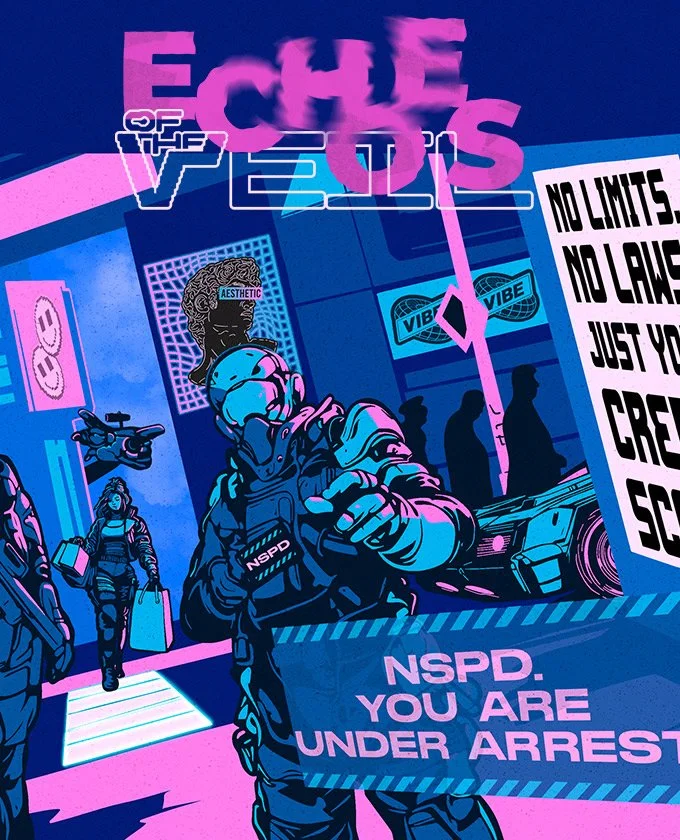
On this special episode we bring fellow Philadelphia-based designer Raffi onboard to explore Echoes of the Veil, a new expansion that turns the
Forged in the Dark masterwork of design CBR+PNK into a quick-fire mini-campaign engine.
We jump straight into character creation, unpacking the new runner-growth track and “Weird" options, modular downtime boards, and other Veil-specific mechanics along the way—smart add-ons that deepen play without slowing the momentum that made CBR+PNK a cult favorite. Expect tight action, abrupt pivots, and a city that pushes back as hard as you lean in. After the...
Episode 12 Launching Our Sci-Fi Arc
Episode 12 welcomes clinical-tech nerd—and lifelong D&D DM—Sean, deepening the Modern Mythology bench to four hosts. (Sean, James, and Scott are on-mic this time).
A quick opening discussion uncovers Sean’s gaming roots and, in the process, reveals some of how each host hacks rules at the table, a topic we will surely return to. Scott—who has logged hundreds of systems—champions underrated mechanics and explains why he drifts from Dungeons & Dragons even as the podcast keeps circling back; Sean defends single-system mastery; James moderates the middle ground.
With philosophies compared, the crew jumps...
Episode 11: Horror RPG Wrap-Up
Our horror TTRPG spotlight winds down—for now. Jamie, Mark, and Scott unpack game mechanics that subtly shape pacing and tension, exploring ritual framing, partial successes, player-facing rolls, and objective-driven rewards.
We also discuss two cult-favorite horror rpgs we haven’t covered before—Unknown Armies and Kult—before diving into a brisk (~30-minute) actual play of Don’t Rest Your Head.
Topics Discussed:
01:30 Podcast milestone
05:59 Honorable mentions
09:25 Unknown Armies
23:00 Kult
40:30 Applying these ideas at the table
66:20 Don’t Rest Your Head — actual play
88:40 DR...
Episode 10: Player Spotlight
In Episode 10, Mark, Jamie, and Scott follow up our discussion on story-facing design by zeroing in on player spotlight: who talks when, who takes control of a moment, and how game systems shape pacing and participation.
This episode asks a simple but essential question—how do you decide who gets the scene? From GM-led framing to player-initiated action, from systems that distribute authority to those that leave it to group consensus, we discuss how spotlight is shared, negotiated, or wrestled for. It’s not just about giving everyone equal time—it’s about making every moment count, and usin...
Episode 9: Ronin Interview & Actual-Play
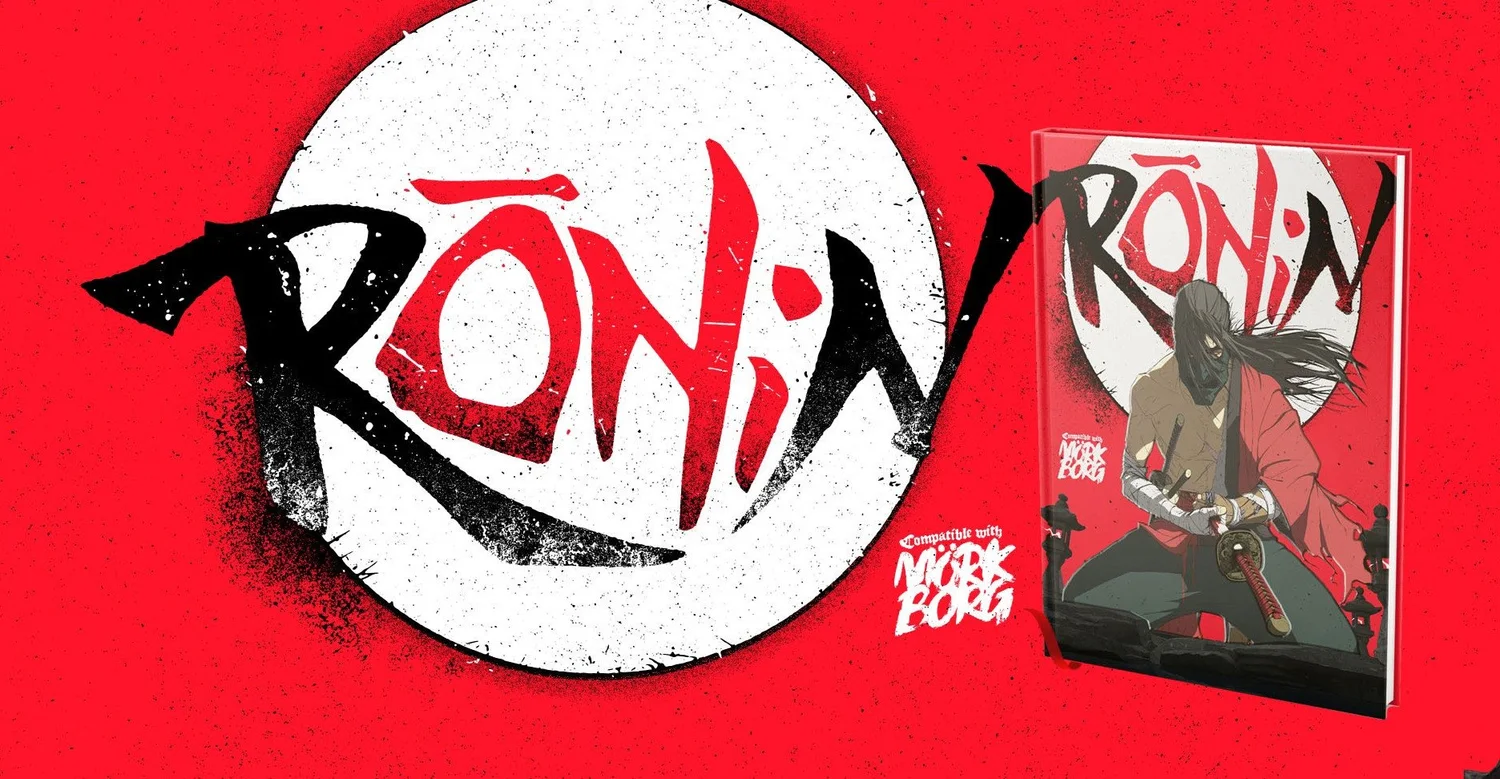
We sat down with Sacha Lightfoot of Slightly Reckless Games to talk all things Ronin—a brutal, beautiful RPG about masterless samurai and the weight of honor. We dig into where the game came from, what makes it sing, and why we think OSR games are SHITE (clickbait, we actually don't).
Sacha shares what’s next from SRG, and we get into how Ronin adapts and builds on Mörk Borg’s core concepts. There’s death, duty, and just enough darkness to feel real. As always, we talk theme, tone, and what we’re really chasing in an RPG.<...
Episode 8: story structure, play concepts
Here is our inaugural conversation about story structure and the ways both system and choice shape our RPG sessions. In this episode, we focus on the classic three-act structure—how it translates into collaborative, improvised play over the course of an ongoing campaign, or within individual sessions.
We explore a few core questions:
Where does the responsibility for story lie in an RPG?
What games drive narrative through structure, and how do they do it?
How can we think differently about the formulas we bring to the table?
Our go...
Episode 7: Zhenya's Wonder Tales, Jason Morningstar Interview and ActualPlay
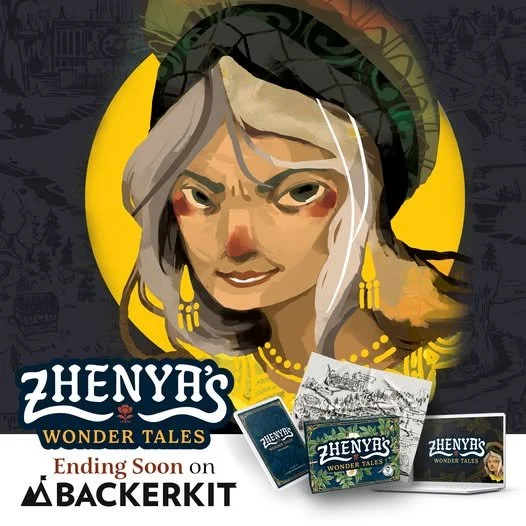
This episode highlights an exciting new story game from Bully Pulpit Games, Zhenya's Wonder Tales, a GMless rpg driven by cards to tell grim slavic-inspired fairy tales. We do our first interview with the game designer, Jason Morningstar - prolific designer of Fiasco, Shab-al-hiri Roach, and Gray Ranks, among others.
Check out Zhenya's Wonder Tales on Backerkit - Campaign ends April 4th.
Topics Discussed:
00:00:45 Intro
00:07:30 Green and Narrow Bed
00:12:12 Zhenya's Wonder Tales
00:24:00 Art by Momatoes
00:32:20 Safer spaces in rpgs
00:37:25 Explicit stakes...
Episode 6: Exposition and RPGs
The crew have a conversation about how to convey information at the table. The GMs responsibility and the roles players have to bring the fiction to the game. This is a big topic but we chat about props, failing forward, NPCs and other tools we employ to bring depth and color to our worlds. As usual, our conversation ranges far and wide.
Topics Discussed:
00:01:00 Introducing the ideas
00:07:50 No One Cares About Your Lore (until it becomes part of the story)
Enter the Dungeon
00:10:50 Show, Don't Tell
Thomas...
Episode 5: Structure, & Whispering Vault
The gang has a discussion on structure in TTRPGs. How does structure make a good horror game? How does setting inform players what they can and can’t do? Some examples of story structure in World of Darkness, Invisible Sun, and Dogs in the Vineyard. Then the crew plays a short session of Whispering Vault, Mike Nystul’s 1993 story game inspired by the likes of Hellraiser and Nightbreed. We play it fast and loose but hope we hit in the key elements of play and this intriguing game’s explicit ritualistic structure.
Topics:
1:45 Weird forward games<...
Episode 4: Player Agency
In episode 4, Jamie and Scott have a lot to say about agency at the table. Who controls what? Who drives the story? Who narrates die outcomes? Traditionally the GM handles a lot of this but we challenge groups to explore situations where you can hand over a lot of that responsibility. And we discuss over a dozen games that change how we think about agency.
Topics:
1:00 Seriousness
3:35 Ginni Di - https://youtu.be/DXUnEk4cuYI?si=M_5Dr4dv_b_E-1vH
4:50 Monte Cook - https://www.montecookgames.com
10:35...
Episode 3: Chronicles of Darkness Basics
In Episode 3 of Modern Mythology, we continue our exploration of horror RPG systems with Chronicles of Darkness, the successor to White Wolf’s World of Darkness and the “new” World of Darkness. While the editions’ lineage may be complex, the system’s core mechanics remain intuitive and accessible. To demonstrate how it plays, we dive into an Actual Play with a simple yet evocative premise: “Your characters work at a 1990s convenience store.” From character creation to the gradual escalation of tension, the scenario unfolds, transforming the ordinary into something unsettlingly extraordinary. At the end we talk a bit about what we...
Episode 2: Collective Stories, Blades in the Dark
Welcome to modern mythology, a podcast that explores the many intersections of story and system in every episode. We will discuss some facet of how RPGs function as modern myths, providing a shared canvas for creativity and the collaborative discovery of new worlds.
Episode 2 Collective Stories. Getting on the same page with Session 0 by the end, and we begin our exploration of RPGs with Blades in the dark actual play.
Collision of Myth and roleplaying 0:26
Some of our favorite RPG moments 3:35
Film and media 6:25
Growing up gamers 9:05
...
Episode 1: Why Modern Myth?
In the first episode of Modern Mythology, hosts Scott and James have an introductory discussion about how RPGs function as modern myths, blending ancient storytelling structures with collaborative, character-driven gameplay. We explore how mythology and archetypes inform the way games are created and played, with RPGs often becoming shared narratives that draw from communal ideas and personal creativity. Highlighting the importance of player agency and story structure, they aim to inspire listeners to deepen their approach to games.
Future episodes will explore different genres, online versus in-person play, play styles and cultures of play, and how RPGs...


