Shirtloads of Science

Dr Karl's a curious optimist – a great combination for a science lover. Join him and his guests for weird facts, amazing conversation and remember, it's never too late for a happy childhood. https://drkarl.com/
How Two Students Fixed the Focus of James Webb from Earth with Prof. Peter Tuthil, Dr. Louis Desdoigts & Max Charles (468)

When a problem with the James Webb Space Telescope left its images frustratingly out of focus, the solution wasn't fixed in space... it was fixed from Earth. At the University of Sydney, PhD students Dr. Louis Desdoigts and Max Charles spent two years rewriting and refining code to recalibrate a critical instrument designed by Professor Peter Tuthill: the Aperture Masking Interferometer.
Their breakthrough sharpened the telescope's infrared vision unlocking clearer views of distant worlds, including volcanic activity on Io, one of Jupiter's moons. In a fitting tribute, the pair even got matching tattoos of the hardware they...
Forensic Science: Fact, Fiction, and Failure with Dr Linzi Wilson-Wilde and Hannah Jarman (467)

This episode features Dr. Linzi Wilson-Wilde and Hannah Jarman discussing the realities of forensic science beyond shows like CSI. Through cases such as the Phantom of Heilbronn case and Lindy Chamberlain-Creighton, they explore how flawed evidence and forensic myths have contributed to wrongful convictions. They also examine common misconceptions around techniques like bite mark analysis, fire investigation, and glass evidence. The conversation emphasises the importance of approaching forensic science holistically, recognising it as just one piece of the broader investigative puzzle.
www.epistemicsolutions.com.au/
The Wellness Woo Economy with Kate Thomas (466)
Pharmacist and science communicator Kate Thomas shares how a viral debunking video launched her into the world of online health education. In this episode we explore the booming "wellness woo" economy and sift through the weeds on why misleading short-form content spreads so easily and the risks of unregulated wellness influencers. Kate breaks down the truth about supplements, the power of placebo, and why accessible, personalised health advice is so hard to find online. She also highlights the important role pharmacists play in helping consumers make informed choices.
TikTok & Instagram: @PrescribeOrPass
Linkedin: Kate Thomas
The Hidden Health Impact of Microplastics with Prof. Michaela Lucas (465)

***Prof Lucas would like to provide the following clarification in regards to comments relating to prenatal BPA exposure and male autism spectrum disorder: "A positive association between high prenatal BPA exposure and ASD diagnosis was only seen in male offspring with a genetic predisposition to low aromatase enzyme activity."
Professor Michaela Lucas, an Immunologist and Immunopathologist researching the health impacts of plastics, joins me to explore what microplastics and plastic-associated chemicals may be doing inside our bodies. We discuss how compounds like bisphenols and phthalates can act like hormone-mimicking molecules, the evidence linking plastic exposure to developmental...
Deepfakes Online and The Future of Truth with Dr. Anna Broinowski (464)

I'm joined by Dr. Anna Broinowski - Senior Lecturer and Director of the Master of Film and Screen Arts at Sydney College of the Arts, University of Sydney - to unpack the rise of deepfakes and synthetic media.
We discuss the emergence of deepfake pornography in 2017, the fact that around 90% of deepfake content targets women and girls, and the growing use of AI in propaganda. From political manipulation to fake ads impersonating me (!), this episode explores how deepfakes are eroding trust, and what that means for the future of media, filmmaking and truth more broadly.
<...
The Rise In Nitrous Misuse with Assoc. Prof. Angela Chiew (463)

Nitrous oxide (better known as "laughing gas") is widely used in medicine as a safe anaesthetic and pain reliever. It's also found in whipped cream canisters and even used in car engines. But Angela Chiew, toxicologist and Associate Professor at UNSW, joins me to set the record straight: the growing recreational misuse of this easily accessible gas is causing serious long-term harm, including nerve damage, cognitive damage, weakening of the spinal cord and mobility impairments.
Cases of misuse are rising globally, likely driven by how easy it is to legally purchase the drug in many countries. This e...
Will AI Take Our Jobs? Part Three of the Great AI Safety Debrief with Dr. Petr Lebedev (462)

In the final episode of the Great AI Safety Debrief series with Dr. Petr Lebedev, we discuss job eradication, AI alignment and the rise in cases of AI deceiving humans. Petr unpacks ideas like AI scheming, situation awareness, parasitic relationships between humans and machines, and even the possibility of AI developing belief systems of its own. We end by zooming out to existential risk, Alan Turing's early warnings, and why aligning AI with human values may be one of the most difficult (and urgent) challenges humanity must face.
Linkedin: Petr Lebedev
palisaderesearch.org/
Is AI Outsmarting Us? Part Two of the Great AI Safety Debrief with Dr. Petr Lebedev (461)
In part two, Dr. Petr Lebedev and I dive deeper into how modern AI systems are grown, not programmed, and the emergence of Shutdown Resistance. We explore AI performance in math and coding competitions, the rapid evolution of ChatGPT models, and why companies are already letting AI write the majority of their code. Petr explains how huge investments globally are pushing these systems forward faster than we can fully understand or control.
The final episode in this 3 part series drops next week!
Linkedin: Petr Lebedev
palisaderesearch.org/
The Great AI Safety Debrief Part One with Dr. Petr Lebedev (460)
Intelligence is emerging from sand and less than 1% of the population seems to care!
Physicist and science communicator Dr. Petr Lebedev joins the podcast following his SXSW talk to explore the rapid advancement of AI and how it's dramatically shifting the global status quo. From completing a PhD in physics and writing for Veritasium, to leading science communication at Palisade Research, Petr steps in to bring some clarity to the weird, wild, and worrying sides of AI.
Did you know that no one truly understands how large language models actually work? We go deep on...
The Milky Way's Mysterious Glow with Prof. Geraint Lewis (459)
A mysterious glow from the centre of the Milky Way has scientists intrigued. Astrophysicist Geraint Lewis explains how this gamma-ray excess, first detected in 2009, could be evidence of dark matter particles interacting deep in our galaxy. With dark matter believed to make up a vast, invisible halo that holds galaxies together, uncovering the source of this glow may bring us closer to understanding what the universe is really made of.
www.geraintflewis.com/
Linkedin: geraint-lewis-4a499b1
Food Additives: What's Safe, What's Not? with Prof. Clare Collins (451) [REPEAT]
In this episode, I'm joined by Professor Clare Collins, Australian dietitian and Professor of Nutrition and Dietetics at the University of Newcastle. Clare is my go-to expert when it comes to all things nutrition, and today she's here to unpack the often confusing world of processed and ultra-processed foods.
We dive into what really separates the two, explore the role of additives, emulsifiers, and flavour enhancers, and discuss how some of these ingredients, designed to make foods more appealing, may be doing our health more harm than good. Plus, she shares practical, no-nonsense tips to help you mak...
Staying Safe Online Part 2 with Troy Hunt (439) [REPEAT]
In part two with Online Safety Consultant Troy Hunt (Have I Been Pwned), we unpack the risks of online age verification in light of Australia's social media ban, including the personal data (often times photos or government documents) sites may demand, and how these security practices can be questionable.
Troy explains why we should be thinking more about data minimisation and the dangers of unnecessary data retention. We go through the safest multi-factor authentication methods, from SMS to physical keys, and Troy shares a personal phishing story, reminding us that no-one is immune to hacking thanks to i...
The Human Side of Misinformation Part 2 with Assoc. Prof. Marian-Andrei Rizoiu (445) [REPEAT]
In part two, Associate Professor Marian-Andrei Rizoiu from the University of Technology Sydney explains how misinformation and toxic online cultures spread. We dive into the "manosphere pipeline" targeting boys as young as 10, its real-world impacts on schools and families, and how it can escalate into radicalisation.
Rizoiu outlines his team's six-stage pipeline - from passive curiosity to active involvement - and why simply giving people facts doesn't solve the problem. Instead, this is a human challenge, and his lab is exploring new ways to diffuse and counter online misinformation before it turns dangerous.
Linkedin: Marian-Andrei...
Rethinking Laundry for the Planet With Dr Holly Kaye Smith (430) [REPEAT]

Most of us throw our clothes in the wash without a second thought, but what if that habit is doing more harm than good? In this episode, Dr. Holly Kaye-Smith, social change expert and communications specialist, challenges the way we think about cleanliness, climate action, and everyday laundry.
From surprising stats (over 90% of washed clothes aren't even dirty!) to the hidden environmental cost of every wash cycle, we dive into the myths, microplastics, and mindsets that shape our laundering routines. Holly shares practical refreshing techniques that save water, and why she recommends everyone have a "rewear chair."<...
Climate Overshoot: The World Beyond 1.5 Degrees with Dr. Andy Reisinger (458)
In this episode, we speak with Dr. Andy Reisinger, an internationally recognised expert in climate change science and policy, with a focus on mitigation and agricultural emissions. Together, we unpack the concept of climate overshoot - why the world is set to exceed the 1.5°C warming limit within the next five years, and what that means for people and the planet. Dr. Reisinger explores whether the damage already done is reversible, what it would take to get back on track, and, hypothetically, the bold actions he would take if he had the power to drive real societal change to c...
More Everyday Consumer Good Facts Part 2 with Ashley Iredale (457)
Consumer technology expert Ashley Iredale returns for part two, bringing more surprising facts about everyday household appliances. We break down why your fridge actually contains more heaters than coolers, demystify the Energy Star rating system, and settle the debate on whether front-loading or top-loading washers are more efficient at cleaning clothes.
Cooking Dinner In Your Dishwasher?! & Other Fun Facts with Ashley Iredale (456)

This episode i'm joined by Ashley Iredale, a consumer technologist and content producer whose winding career through industrial design has armed him with a trove of quirky tips and practical wisdom.
Ashley breaks down the real efficiency of hand-washing versus dishwashers, explains how a dishwasher can double as an oven, and settles the age-old question of how toilet paper should hang. We also dig into his non-linear career journey and how it led to his deep well of surprising insights. There was so much to cover that Part Two lands next week!
Linkedin: Ashley Iredale<...
The Discovery That Changed Astrophysics with Prof. Dame Jocelyn Bell Burnell (455)
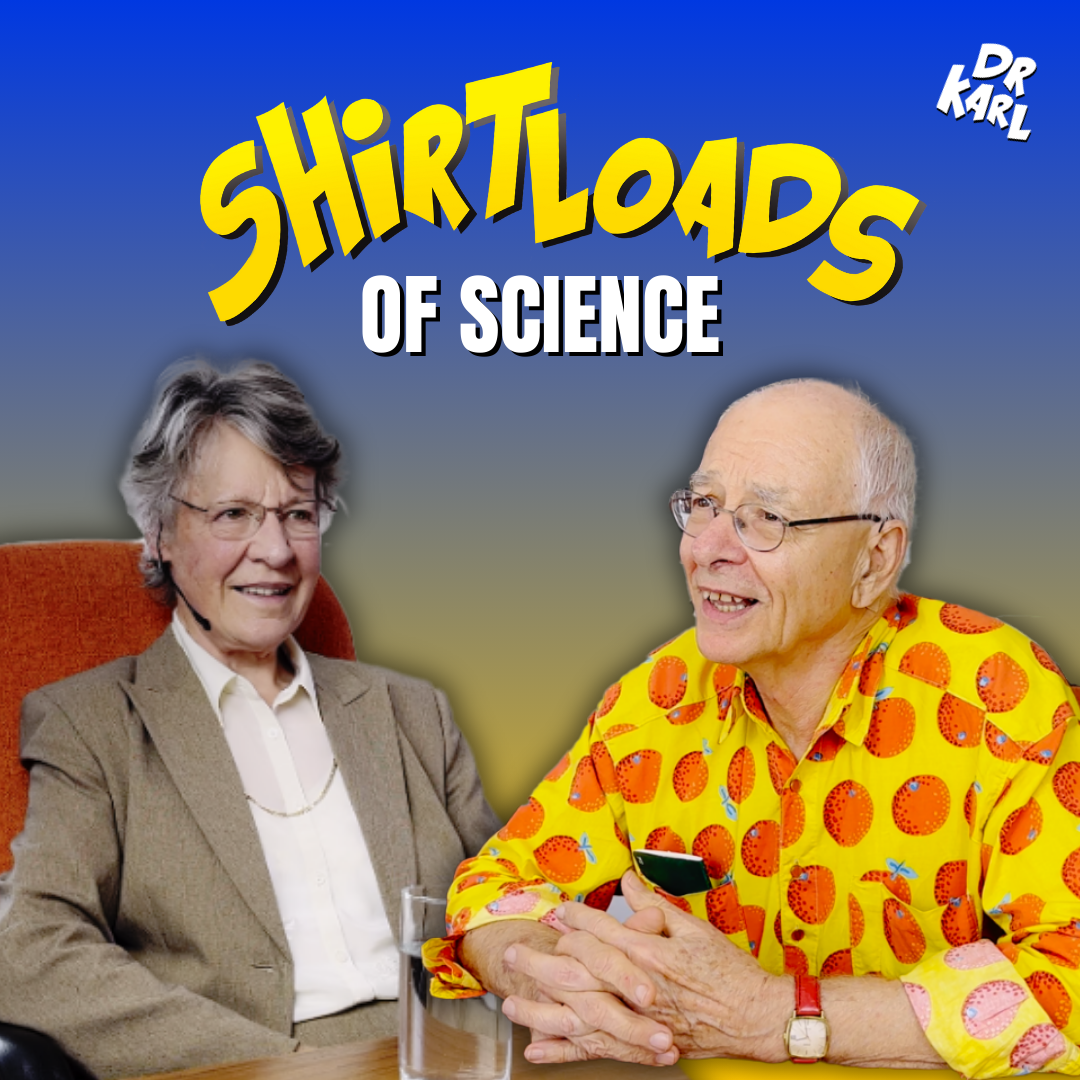
In this episode, I'm joined by the legendary Dame Susan Jocelyn Bell Burnell - the pioneering astrophysicist who discovered pulsars, launching an entirely new field of astrophysics.
She began her PhD searching for quasars, but soon noticed a strange, repetitive signal appearing night after night - so peculiar she jokingly labelled it LGM ("Little Green Men"). That signal would become one of the most important astronomical discoveries of the century, though the credit and Nobel Prize were controversially awarded to her supervisor.
Dr Bell Burnell also shares why she donated $4.3 million of her own prize...
Sunscreen Safety in Australia with John Staton (454)
This week I'm joined by John Staton, one of Australia's leading sunscreen-testing experts, to unpack the big headlines surrounding sunscreen safety. A recent Choice report revealed that 16 out of the 20 tested sunscreen products failed to meet their advertised SPF rating by a significant figure. John helps us to understand what is really going on. He breaks down how sunscreens actually work and the science behind SPF testing and why so many products fell short.
What are Time Crystals? with Prof. Geraint Lewis (453)

In this episode, friend of the show and astrophysicist Professor Geraint Lewis returns to help me wrap my head around one of the strangest ideas in modern physics: Time Crystals.
After stumbling across a Nature article that left my brain pleasantly scrambled, I called up Geraint for a deep-dive into what time crystals are and why physicists are so excited about them.
We explore why Time Crystals don't have real-world applications yet, but how they could open entirely new frontiers in future technology.
Science in Oz: The Good, The Bad and The Ugly with Dr. Catherine Ball (452)
In this episode, futurist and award-winning scientist Dr Catherine Ball dives into the state of science in Australia, uncovering the good, the bad, and the overlooked. From humanoid robotics and wearable exoskeletons transforming healthcare, to Australia's lagging space economy, Ball offers an unflinching look at where we stand. She also highlights world-class cancer detection research happening in Australia, like PROCAN and early ovarian cancer screening innovations that deserve far more recognition. Passionate about inspiring the next generation, Ball shares her advice for young Australians ready to shape the future of science
ww.drcatherineball.com/
Innovative Nanotechnology for Cancer Detection with Dr. Renee Goreham (450)
In this episode, we chat with Dr. Renee Goreham, a physicist and nanotechnologist at the University of Newcastle, and passionate science communicator. Renee is an experimental physicist exploring how our breath could hold the key to detecting lung cancer early—by identifying specific proteins as biomarkers. We also delve into her PhD student's exciting research into a new red-light laser diagnostic tool for breast cancer. Along the way, Renee breaks down the basics of cell biology and shares her inspiring, non-linear journey through physics, nanotech, and beyond. A brilliant example of multidisciplinary science in action.
Follow Renee on...
Gene Therapy & Rare Diseases with Assoc. Prof Leszek Lisowski (449)
In this episode, we speak with Associate Professor Leszek Lisowski, Head of the Translational Vectorology Unit at the Children's Medical Research Institute (CMRI), about the cutting-edge world of gene therapy. He explains how viral vectors are engineered to deliver life-saving treatments for rare genetic diseases - many of which are so uncommon, they're only known by the name of the affected gene. Despite being often overlooked, genetic diseases impact 10% of adults and 30% of children in hospitals. Leszek sheds light on the challenges of diagnosis, the promise of emerging genetic testing, and how his work is paving the way for...
The Brain's Energy Bill: From Childhood to Old Age with Assoc. Prof Sharna Jamadar (448)
In this episode, we're joined by Associate Professor Sharna Jamadar, a cognitive neuroscientist at Monash University, to explore how the brain uses energy, and how that changes across the lifespan. Did you know that a 10-year-old's brain uses over 50% of the body's total energy, compared to just 20% in adults? We dive into why younger brains work harder, the role of synaptic pruning and proliferation, and how the brain's organisation impacts cognitive efficiency. We also touch on the importance of glucose metabolism and its connection to age-related disorders like Alzheimer's. A fascinating look at the energy demands of our most...
Onionlike Layers of Exploding Stars with Prof. Geraint Lewis (447)
My go-to guy for all cosmic things Prof. Geraint Lewis, astrophysicist at the University of Sydney, returns to unpack a fascinating New York Times article on a newly observed "onionlike" space explosion that may reveal a new type of supernova. We dive into what actually happens when a star dies, the onion-layer buildup of elements through nuclear fusion, and how these cataclysmic blasts forge the building blocks of life on Earth. Plus, we explore what this might mean for the ultimate fate of our own Sun.
www.geraintflewis.com/
Linkedin: Geriant Lewis
The Aftermath of Cosmic Collisions with Prof. Geraint Lewis (446)
In this episode, friend of the show Geriant Lewis, Professor of Astrophysics at the Sydney Institute for Astronomy within the University of Sydney, joins us to unpack a fascinating New Scientist article theorising on how a strange line of dwarf galaxies may have formed.
We explore how high-speed collisions between dwarf galaxies can scatter gas and stars across space, sometimes giving rise to entirely new tidal galaxies. Geraint explains the latest thinking on where these dwarf galaxies come from and how these cosmic smash-ups might even shed light on one of the biggest mysteries in physics: the tr...
The Human Side of Misinformation Part 1 with Assoc. Prof. Marian-Andrei Rizoiu (444)
In this episode, I sit down with Marian-Andrei Rizoiu, Associate Professor and head of the Behavioral Data Science Lab at the University of Technology Sydney. Drawing on a three-year research project into the misinformation ecosystem, he reveals that online conspiracies aren't just about false facts. Instead, they meet deep human needs for belonging and identity.
We explore the idea that misinformation is less a content problem and more a human problem, fueled by the attention economy. Rizoiu also weighs in on the growing debate around restricting social media use, such as proposed bans for under-16s, unpacking th...
Science Under Siege with Prof. Michael Mann & Prof. Peter Hotez (443)
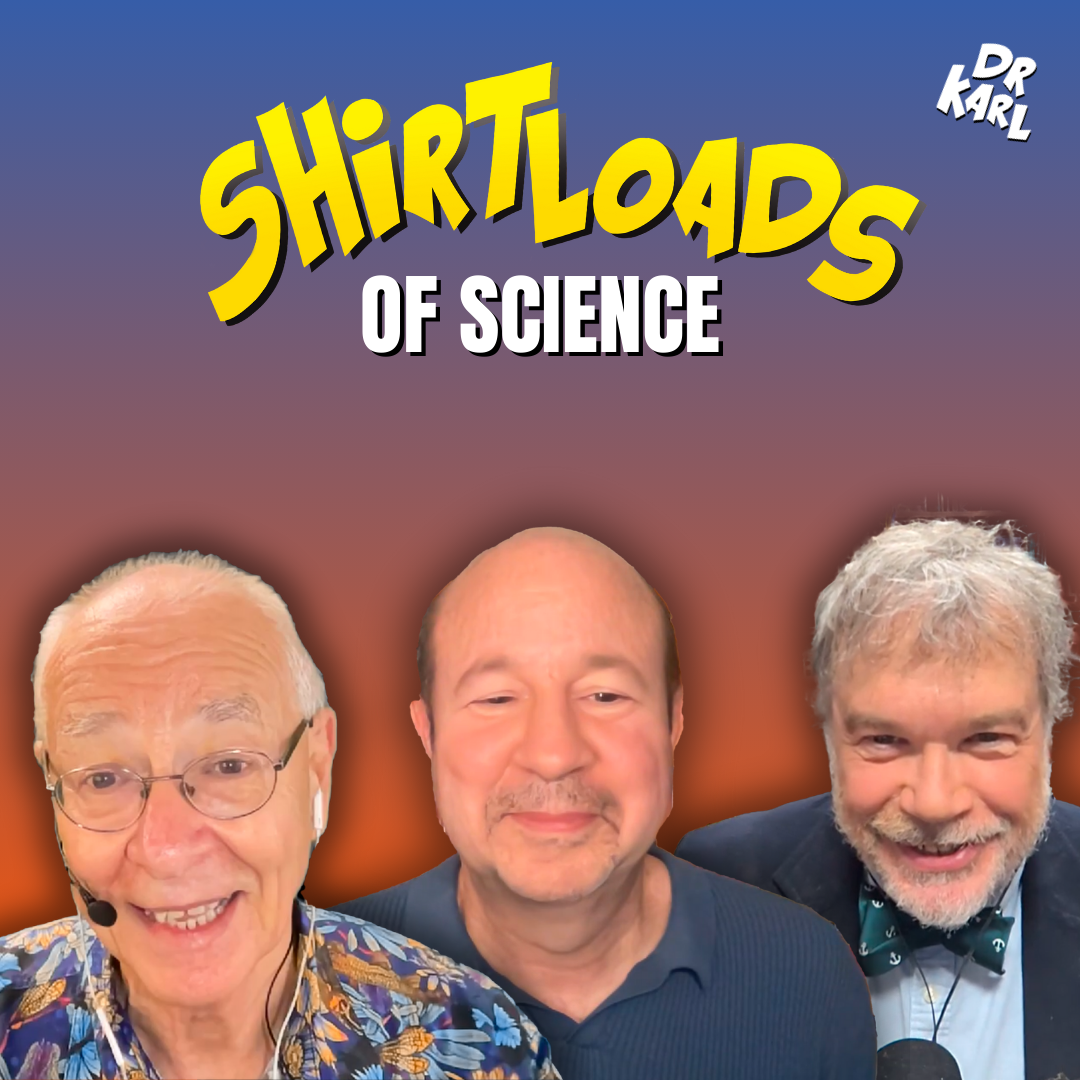
In this episode, we sit down with two of today's most prominent defenders of science: Professor Michael Mann, world-renowned climate scientist, and Professor Peter Hotez, vaccine researcher and advocate for global health equity. Together, they've co-authored Science Under Siege, a powerful new book exposing the forces behind the global anti-science movement.
We explore the surprising parallels between climate denial and vaccine misinformation, and how both Mann and Hotez have faced personal attacks simply for standing by the evidence. They break down the five key drivers of anti-science - plutocrats, professionals, propagandists, petrostates, and the press - and...
From DNA to Policy: Protecting Threatened Species with Prof. Carolyn Hogg (442)
In part two of our conversation with Professor Carolyn Hogg, Research Manager of the Australasian Wildlife Genomics Group at the University of Sydney, we dive deeper into the science and strategy behind threatened species management.
Carolyn shares how her team is developing crucial genetic data to guide conservation, including breed-and-release programs with species like the Tasmanian devil. We discuss the vital role of biodiversity in sustaining planetary health, and the ambitious Earth Biogenome Project, which aims to map the genomes of all 12 million species of eukaryotic life on Earth.
Beyond the lab, Carolyn reveals how...
Whales, Wildlife, and Conserving Threatened Species with Prof. Carolyn Hogg (441)
From collecting urine samples in Antarctica to sampling whale snot to study reproduction, Dr. Carolyn Hogg's career is anything but ordinary. In this episode, she shares how her passion for protecting threatened species led her down some unexpected paths, including earning the nickname 'Dr. Snot'.
We chat about her PhD on whale behaviour, wild whale facts, and the creative ways scientists gather data in the field. There was so much to cover, we had to split it into two! Part 2 dives into her groundbreaking work in conservation genetics.
Linkedin: Carolyn Hogg
X: @HoggCarolyn...
Lightning, Fertiliser, and the Future of Green Nitrogen with Professor PJ Cullen (440)
In this episode, Professor PJ Cullen, Chemical Engineering expert from the University of Sydney, breaks down the global nitrogen challenge. We explore why nitrogen is essential for life, the history of fertiliser - from the Guano Wars to the energy-intensive Haber-Bosch process - and how today's nitrogen production is harming the planet. Cullen introduces PlasmaLeap, his startup using non-thermal plasma to mimic lightning and fix nitrogen sustainably. We also dive into the risks of nitrogen storage, the 2020 Beirut explosion, and the urgent need to electrify chemical industries.
https://www.plasmaleap.com/
Linkedin: PJ Cullen
Have I been Pwned? With Troy Hunt (438)
In this episode, we're joined by Troy Hunt, Australian online security consultant, creator of Have I Been Pwned, and one of the world's leading voices on data breaches. He breaks down the key differences between encryption and hashing, and what they mean for keeping your data safe. We dive into infamous data breaches, including the Ashley Madison case, and explore the often hidden, long-term impacts these leaks can have on people's lives. With online scams and breaches costing Australians over $3 billion every year, we also look at the rising threat of ransomware and why it's so hard to fight. T...
Climate After Net Zero with Prof. Sarah Perkins-Kirkpatrick (437)
In this episode, we sit down with Australian climate scientist Professor Sarah Perkins-Kirkpatrick to explore the story of climate science, how we first discovered the planet was warming, and what we now know about the forces driving it. Sarah breaks down the role of carbon dioxide in trapping heat like a planetary blanket and shares insights from her cutting-edge research on long-term climate modelling. What would happen if we stopped emitting CO₂ today? The answers are sobering, yet they also offer hope, underscoring why optimism remains essential in the fight for a livable future.
Linked in: Sarah Pe...
A Conversation with Nobel Laureate Professor Donna Strickland (436)
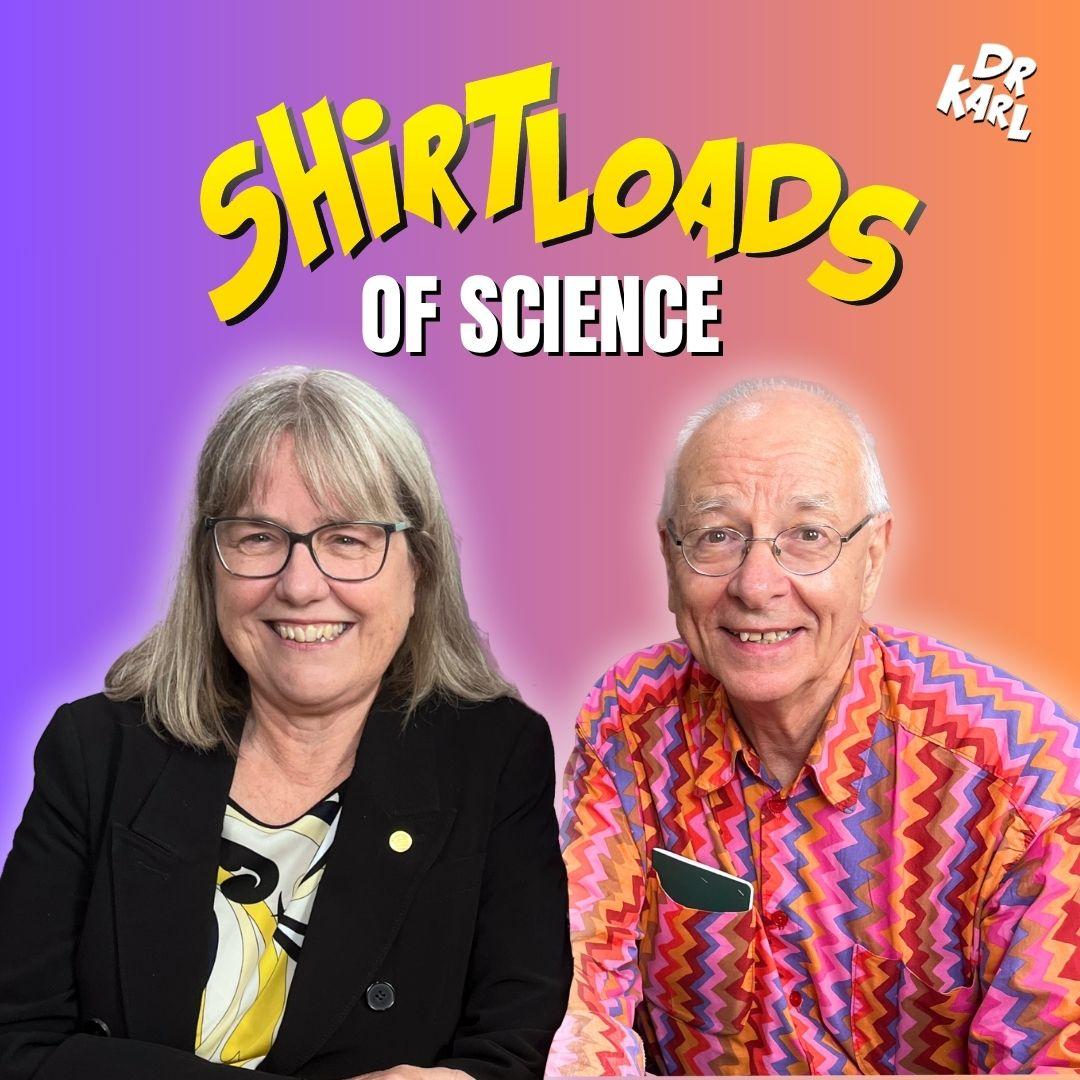
I had the honor of sitting down with Professor Donna Strickland, Nobel Prize-winning physicist the third woman in history to receive the prestigious award in physics. In our conversation, we discuss her groundbreaking work in laser physics and the journey that led her there. From her early academic interests to the moment she received the life-changing call from the Royal Swedish Academy at 5AM (?!), Donna shares insights into her discovery of chirped pulse amplification (CPA), a revolutionary technique that changed the field of high-intensity lasers.
We discuss the science behind CPA and the moment she accidentally broke...
Part 2 with Prof. Carolyn Hogg (442)
Wikipedia Part Two with Dr. Heather Ford (435)
In part two of our chat with Dr. Heather Ford, we delve deeper into the hidden dynamics of Wikipedia — the world's largest encyclopedia and 8th most visited website, run largely by volunteers. We explore how pages are updated in real time, yet controversial topics like Indigenous place names often face delays and heated edit wars. Dr. Ford explains how this can lead editors to walk away, raising concerns about who gets to shape history. We also unpack the platform's lack of diversity and the growing influence of AI — with up to 90% of internet content projected to be AI-generated by the end...
Wikipedia: The Power and the Pitfalls Part One with Dr. Heather Ford (434)
I'm joined by Dr. Heather Ford, ARC Future Fellow and Professor in the School of Communications at UTS, to explore the fascinating world of Wikipedia. Inspired by her article "We analysed 35,000 Wikipedia entries about Australian places. Some of them sanitise history" in The Conversation, we dive deep into the strengths and shortcomings of one of the internet's most beloved resources.
We unpack how Wikipedia works behind the scenes: who edits it, how "edit wars" break out, and why it remains such a radical platform — a place where history can be written in real time, sometimes even before eve...
Hypersonics Part Two with Dr. Graham Wild (433)

In part two of my conversation with Dr. Graham Wild, we dive deeper into the fascinating world of hypersonic machines. We explore how sound waves behave at extreme speeds, the significance of the boundary layer, and what materials are best suited for these ultra-fast aircraft.
Connect with Dr. Graham Wild on LinkedIn
Twitter/X: @AerospaceDoctor
Hypersonics Part One with Dr. Graham Wild (432)

Aviation expert Dr. Graham Wild returns to take us beyond the basics of flight and into the high-speed world of subsonic vs. hypersonic aircraft. We break down the engine mechanics behind these incredible machines, and I squeeze in a humblebrag about sitting in an SR-71 (yes, okay, it was grounded).
It's a theory-packed episode, so we've split it into two parts. Catch Part 2 next week.
Connect with Dr. Graham Wild on Linkedin
Twitter/ X - @aerospacedoctor
How Planes Fly (A Brief Introduction) with Dr. Graham Wild (431)

In 2020, Scientific American made waves with the provocative headline: "No One Can Explain Why Planes Stay in the Air." But is that really true? Dr. Graham Wild, senior lecturer in aviation science and technology at the University of New South Wales in Canberra, joins us to set the record straight.
In this episode, we dip our toes into the complex of flight. We scratch at the very surface of the topic in an episode that could easily take over 20 hours.
Connectt with Dr. Graham Wild on Linkedin
Twitter/ X - @aerospacedoctor


