AI + a16z
Artificial intelligence is changing everything from art to enterprise IT, and a16z is watching all of it with a close eye. This podcast features discussions with leading AI engineers, founders, and experts, as well as our general partners, about where the technology and industry are heading.
How AI Is Rewriting the Rules of Cybersecurity | Truffle Security & Socket
Joel De La Garza is joined by Dylan Ayrey, co-founder and CEO of Truffle Security, and Feross Aboukhadijeh, founder and CEO of Socket, to discuss one of the biggest shifts happening in cybersecurity: AI models are no longer just finding vulnerabilities—they're exploiting them. As frontier models become increasingly capable of hacking, software security, supply chain attacks, and cyber defense are entering a fundamentally new era.
The conversation explores AI-powered hacking, software supply chain attacks, leaked credentials, zero-day vulnerabilities, package manager security, and why the path of least resistance for increasingly autonomous AI systems may also be th...
Inside vLLM: The Engine Powering Open-Source AI
Elena Burger and Matt Bornstein are joined by Simon Mo, co-founder and CEO of Inferact, the open-source inference engine powering many of today's most advanced AI applications. Together, they explore how open-source AI evolved from a research project into critical infrastructure, why inference has become one of the most important layers of the AI stack, and what it takes to bring frontier intelligence to developers around the world.
The conversation covers vLLM's origins, the rise of open-weight models, why companies increasingly want control over their AI infrastructure, and how open-source inference enables the next generation of AI...
Building Self-Accelerating AI with Mirendil
Matt Bornstein speaks with Mirendil cofounders Behnam Neyshabur and Harsh Mehta about their vision for building self-accelerating AI.
After leading research efforts at Google and Anthropic, the founders started Mirendil around a simple question: what happens when AI systems can meaningfully contribute to their own development? Rather than focusing solely on AI as a tool for productivity, they argue that the most important application may be accelerating scientific and technological progress itself.
The conversation explores AI research, scaling laws, automated engineering, scientific discovery, and the challenges of building systems that can improve over time. They...
Ideogram’s Open-Weights Image Model and the Future of AI Design

Yoko Li and Justine Moore speak with Ideogram founder and CEO Mohammad Norouzi about image generation models, design workflows, and the evolving relationship between AI and creative work.
The conversation covers Ideogram's decision to release an open-weight model, the challenges of generating text and layouts within images, and why controllability has become an increasingly important area of research. They discuss prompting, customization, editing, and the tradeoffs between general-purpose models and systems optimized for specific creative tasks.
Along the way, Norouzi shares his views on open-source AI, design tools, agentic workflows, and how image generation models...
Building Search for AI Agents with Exa CEO Will Bryk
Sarah Wang speaks with Exa cofounder and CEO Will Bryk about building search infrastructure for the AI era.
The conversation covers Exa’s origins, why traditional search engines were not designed for AI agents, and how search changes when the user is no longer a human but an autonomous system. They discuss retrieval, agent workflows, coding agents, data access, and why search may become a foundational layer for the emerging agent economy.
Along the way, Bryk shares his views on AI-native products, the future of information discovery, and why some of the most important problems in...
AI Agents and the Fight for Customer Data
Martin Casado speaks with George Fraser, cofounder and CEO of Fivetran, about the future of data infrastructure in the age of AI.
The conversation covers Fivetran’s merger with dbt, the changing role of data platforms, and why Fraser believes many companies are overestimating the threat AI poses to enterprise software. They discuss open data access, the backlash against AI agents accessing systems of record, and why businesses still need centralized data foundations even as agent-based workflows become more common.
Along the way, Fraser shares his views on data gravity, coding agents, enterprise AI adoption, an...
Ben Horowitz on AI Infrastructure, Economics and The New Laws of Software
Recorded live at the a16z Fintech Connect conference in Deer Valley, Alex Rampell speaks with Ben Horowitz, cofounder and general partner at a16z, about how AI has rewritten the fundamental rules of software competition, why crypto infrastructure will become essential in an AI-dominated world, and what the future holds for venture capital.
Follow Alex Rampell on X: https://twitter.com/arampell
Follow Ben Horowitz on X: https://twitter.com/bhorowitz
Check out everything a16z is doing with artificial intelligence here, including articles, projects, and more podcasts.
AI Infrastructure, Distribution, and the Next Wave of Software
Sophie Buonassisi speaks with Jennifer Li, general partner at a16z, about why infrastructure is becoming one of the most important areas in AI. They discuss how the shift to AI-native systems is reshaping everything from storage and compute to developer tooling and orchestration.
The conversation explores early insights from companies like ElevenLabs, why distribution has become the defining advantage in AI, and how founders can think about product, research, and go-to-market in a rapidly evolving landscape. Jennifer also shares her perspective on creative tools, the role of AI in storytelling, and what the next phase of...
From Vector Databases to Knowledge Engines: The Next Layer of AI
Peter Levine speaks with Ash Ashutosh, CEO of Pinecone, about the launch of Nexus and the shift from vector databases to knowledge engines. As agents become the primary users of software, they discuss why traditional retrieval systems break down and how AI systems need to evolve to support machine-to-machine interactions.
The conversation explores how agents currently spend most of their time retrieving and reasoning over data, why that approach is inefficient, and how moving reasoning closer to the data can dramatically improve performance, accuracy, and cost. Ash also explains how Pinecone is rethinking the stack for agentic...
Why We Need Continual Learning
Elena Burger speaks with Malika Aubakirova, partner on the AI infrastructure team at a16z, about why today’s AI systems struggle to learn over time. They discuss the limits of in-context learning, the case for continual learning, and how models may need to evolve from static systems into ones that learn from experience.
Resources:
Follow Malika on X: https://x.com/MaikaThoughts
Follow Elena on X: https://x.com/VirtualElena
Read more on Why We Need Continual Learning: https://a16z.com/why-we-need-continual-learning/
Check out eve...
The Agent Era: Building Software Beyond Chat with Box CEO Aaron Levie
Erik Torenberg, Steve Sinofsky, and Martin Casado speak to Aaron Levie, CEO at Box, about what happens to enterprise software when agents become the primary users. They discuss why coding agents succeed where other knowledge work agents struggle, what abstraction layers mean for the workforce, and how data access and systems of record must change in an agent-first world.
Follow Aaron Levie on X: https://twitter.com/levie
Follow Steve Sinofsky on X: https://twitter.com/stevesi
Follow Martin Casado on X: https://twitter.com/martin_casado
Follow Erik Torenberg on...
Rethinking Git for the Age of Coding Agents with GitHub Cofounder Scott Chacon
Matt Bornstein speaks with Scott Chacon, cofounder of GitHub and CEO of GitButler, about why Git's user interface has barely changed since 2005, how GitButler is rethinking version control for both humans and AI agents, and what the "next GitHub" might actually look like. They cover parallel branches, agent-optimized CLI design, the future of code review, and why the best engineers of the future will be the best writers.
Resources:
Follow Scott Chacon on X: https://twitter.com/chacon
Follow Matt Bornstein on X: https://twitter.com/BornsteinMatt
...
How AI Is Reshaping IT Services from the Inside
Joe Schmidt speaks with Peter Doyle, CEO of Treeline, about why the $100B managed service provider market is a decade behind modern technology and how Treeline is building a new model that combines human technicians with AI and automation. They discuss the company's growth strategy, why pure play software struggles in services categories, and what the forward deployed engineer trend tells us about AI adoption.
Resources:
Follow Peter Doyle on LinkedIn: https://www.linkedin.com/in/peterwdoyle/
Follow Joe Schmidt on X: https://twitter.com/joeschmidtiv
Check out eve...
Patrick Collison on Stripe’s Early Choices, Smalltalk, and What Comes After Coding
Michael Truell, CEO of Cursor, sits down with Patrick Collison, CEO of Stripe and an investor in Anysphere, to talk about Collison's history with Smalltalk and Lisp, the MongoDB and Ruby decisions Stripe still lives with 15 years later, why he'd spend even more time on API design if he could do it over, and whether AI is actually showing up in economic productivity data. This episode originally aired on Cursor's podcast.
Follow Patrick Collison on X: https://twitter.com/patrickc
Follow Michael Truell on X: https://twitter.com/mntruell
Follow Cursor: https://www.yo...
OpenClaw: Why the Internet Isn't Built for AI Agents
Yoko Li, Guido Appenzeller, and Joel de la Garza discuss OpenClaw, the open source personal AI assistant that's forcing a rethink of how identity, permissions, and security work on the internet. They cover why setting up Gmail integration took seven hours, what happens when an agent asks for domain-wide access to every email in your company, and why consumer websites like DoorDash and Amazon have no incentive to make their services agent-friendly.
Resources:
Follow Yoko Li on X: https://twitter.com/stuffyokodraws
Follow Guido Appenzeller on X: https://twitter.com/appenz
...What's Missing Between LLMs and AGI - Vishal Misra & Martin Casado
Vishal Misra returns to explain his latest research on how LLMs actually work under the hood. He walks through experiments showing that transformers update their predictions in a precise, mathematically predictable way as they process new information, explains why this still doesn't mean they're conscious, and describes what's actually required for AGI: the ability to keep learning after training and the move from pattern matching to understanding cause and effect.
Resources:
Follow Vishal Misra on X: https://x.com/vishalmisra
Follow Martin Casado on X: https://x.com/martin_casado
...
Replit's CEO on Vibe Coding, Wealth Building, and What Most People Get Wrong About AI
Jack Neel speaks with Amjad Masad, CEO at Replit, about how AI is making it easier than ever to build and ship software without a technical background. They discuss Replit's rise from a browser-based coding tool to a platform generating $250 million in annual revenue, why Masad turned down a $1 billion acquisition offer, and his case for why AI represents empowerment rather than existential risk. This episode originally aired on The Jack Neel Podcast.
Resources:
Follow Amjad Masad on X: https://twitter.com/amasad
Follow Jack Neel on X: https://twitter.com/ja...
Jack Altman & Martin Casado on the Future of VC
Jack Altman sits down with Martin Casado, General Partner at a16z, to unpack the shifting dynamics of venture capital and why media matters more than ever. They cover a16z’s evolution from generalists to specialized platforms, the rise of AI infrastructure, and why today’s fiercest battles are often for talent, not market share.
Timecodes:
0:00 Introduction
0:27 Importance of Media for VC
3:50 Evolution of a16z
7:00 Specialization
10:32 Value of Distribution
13:16 Staying Power in Infrastructure
19:49 The Conflicts Dynamic
26:32 State of Play in A...
AI’s Capital Flywheel: Models, Money, and the Future of Power
a16z's Martin Casado and Sarah Wang join Latent Space hosts Alessio Fanelli and Swyx to discuss what makes this AI investment cycle unlike anything in the history of venture capital. They cover why the lines between venture and growth, apps and infrastructure are blurring, how frontier model companies can raise more than the aggregate of everyone built on top of them, and why the industry-wide gap between perception and reality has never been wider.
Follow Alessio Fanelli on X: https://x.com/FanaHOVA
Follow Swyx (Shawn Wang) on X: https://twitter.com/FanaHOVA
<...Durable Execution and the Infrastructure Powering AI Agents
Raghu Raghuram, Managing Partner at a16z, and Sarah Wang, General Partner at a16z, speak with Samar Abbas, CEO of Temporal, about how durable execution became the infrastructure layer behind some of the world’s most widely used AI agents. They cover why long-running agents require state management and recoverability, how Temporal powers OpenAI’s Codex and Snap’s Story processing, and why the shift from interactive to background agents is creating distributed systems challenges at a scale that didn’t exist two years ago.
Resources:
Follow Samar Abbas: https://x.com/SamarAtTem...
Evals, Feedback Loops, and the Engineering That Makes AI Work
Martin Casado speaks with Ankur Goyal, founder and CEO of Braintrust, about where engineering actually matters in AI and where it doesn't. They cover the open source vs closed source model cycle, why Chinese models are gaining ground faster than spending suggests, whether AI demand will eventually saturate, and the Bash vs SQL benchmark that challenges the "just give it a computer" approach to agents.
Follow Martin Casado on X: https://twitter.com/martin_casado
Follow Ankur Goyal on X: https://twitter.com/ankrgyl
Check out everything a16z is doing with...
Sam Altman on Sora, Energy, and Building an AI Empire
Sam Altman has led OpenAI from its founding as a research nonprofit in 2015 to becoming the most valuable startup in the world ten years later.
In this episode, a16z Cofounder Ben Horowitz and General Partner Erik Torenberg sit down with Sam to discuss the core thesis behind OpenAI’s disparate bets, why they released Sora, how they use models internally, the best AI evals, and where we’re going from here.
Follow Sam on X: https://x.com/sama
Follow OpenAI on X: https://x.com/openai
Learn more about Open...
Why This Isn't the Dot-Com Bubble | Martin Casado on WSJ's BOLD NAMES
Christopher Mims and Tim Higgins of the Wall Street Journal sit down with a16z General Partner Martin Casado on WSJ’s Bold Names to ask whether the AI spending boom is a bubble waiting to burst. Martin explains why the fundamentals differ dramatically from the dot-com era—when WorldCom had $40 billion in debt versus today's tech giants with hundreds of billions on their balance sheets—and why a speculative valuation correction shouldn't be confused with systemic collapse. They also discuss where a16z sees opportunity in the "long tail" of AI companies beyond the state-of-the-art large language models.
...
Martin Casado on the Demand Forces Behind AI
In this feed drop from The Six Five Pod, a16z General Partner Martin Casado discusses how AI is changing infrastructure, software, and enterprise purchasing. He explains why current constraints are driven less by technical limits and more by regulation, particularly around power, data centers, and compute expansion.
The episode also covers how AI is affecting software development, lowering the barrier to coding without eliminating the need for experienced engineers, and how agent-driven tools may shift infrastructure decision-making away from humans.
Follow Martin Casado on X: https://twitter.com/martin_casado
Follow Patrick Mo...
How Mintlify Is Rebuilding Documentation for Coding Agents
Mintlify is a documentation platform built by cofounders Han Wang and Hahnbee Lee to help teams create and maintain developer docs. In this episode, Andreessen Horowitz general partners Jennifer Li and Yoko Li speak with Han and Hahnbee about how coding agents are changing what “good docs” mean, shifting documentation from a human-only resource into infrastructure that powers AI tools, support agents, and internal knowledge workflows. They share Mintlify’s early journey, including eight pivots, the two-day prototype that landed their first customer, and the “do things that don’t scale” sales motion that helped them win early traction. The conversa...
Inferact: Building the Infrastructure That Runs Modern AI
Inferact is a new AI infrastructure company founded by the creators and core maintainers of vLLM. Its mission is to build a universal, open-source inference layer that makes large AI models faster, cheaper, and more reliable to run across any hardware, model architecture, or deployment environment. Together, they broke down how modern AI models are actually run in production, why “inference” has quietly become one of the hardest problems in AI infrastructure, and how the open-source project vLLM emerged to solve it. The conversation also looked at why the vLLM team started Inferact and their vision for a universal infe...
How Should AI Be Regulated? Use vs. Development
To Regulate AI Effectively, Focus on How It’s Used
A conversation with Martin Casado on learning from past computing platform shifts, understanding marginal risk in AI, and why open source matters for US competitiveness.
One of the core pillars of our roadmap for federal AI legislation makes clear AI should not excuse wrongdoing. When people or companies use AI to break the law, existing criminal, civil rights, consumer protection, and antitrust frameworks should still apply. Enforcement agencies should have the resources they need to enforce the law. If existing bodies of law fall short in...
Michael Truell: How Cursor Builds at the Speed of AI
When four MIT grads decided to build a code editor while everyone else was building AI agents, they created the fastest-growing developer tool ever built.
Cursor CEO Michael Truell joins a16z’s Martin Casado to discuss the deliberate constraints that led to breakthroughs: why they rejected the "democratization" narrative to focus on power users, how their 2-day work trials test for agency over credentials, and the strategic decision to own the editor when conventional wisdom said it was impossible.
Follow Michael on X: https://x.com/mntruell
Stay Updated: If you enjoyed this...
Dylan Patel on the AI Chip Race - NVIDIA, Intel & the US Government
Nvidia’s $5 billion investment in Intel is one of the biggest surprises in semiconductors in years. Two longtime rivals are now teaming up, and the ripple effects could reshape AI, cloud, and the global chip race.
To make sense of it all, Erik Torenberg is joined by Dylan Patel, chief analyst at SemiAnalysis, joins Sarah Wang, general partner at a16z, and Guido Appenzeller, a16z partner and former CTO of Intel’s Data Center and AI business unit. Together, they dig into what the deal means for Nvidia, Intel, AMD, ARM, and Huawei; the state of US-C...
Feed Drop from The Generalist: Why a16z's Martin Casado believes the AI boom still has years to run
This episode is a special replay from The Generalist Podcast, featuring a conversation with a16z General Partner Martin Casado. Martin has lived through multiple tech waves as a founder, researcher, and investor, and in this discussion he shares how he thinks about the AI boom, why he believes we’re still early in the cycle, and how a market-first lens shapes his approach to investing.
They also dig into the mechanics behind the scenes: why AI coding could become a multi-trillion-dollar market, how a16z evolved from a small generalist firm into a specialized organization, the gr...
Fei-Fei Li: World Models and the Multiverse
What if the next leap in artificial intelligence isn’t about better language—but better understanding of space?
In this episode, a16z General Partner Erik Torenberg moderates a conversation with Fei-Fei Li, cofounder and CEO of World Labs, and a16z General Partner Martin Casado, an early investor in the company. Together, they dive into the concept of world models—AI systems that can understand and reason about the 3D, physical world, not just generate text.
Often called the “godmother of AI,” Fei-Fei explains why spatial intelligence is a fundamental and still-missing piece of today’s AI...
Building the “See Something, Say Something” AI for Every Camera
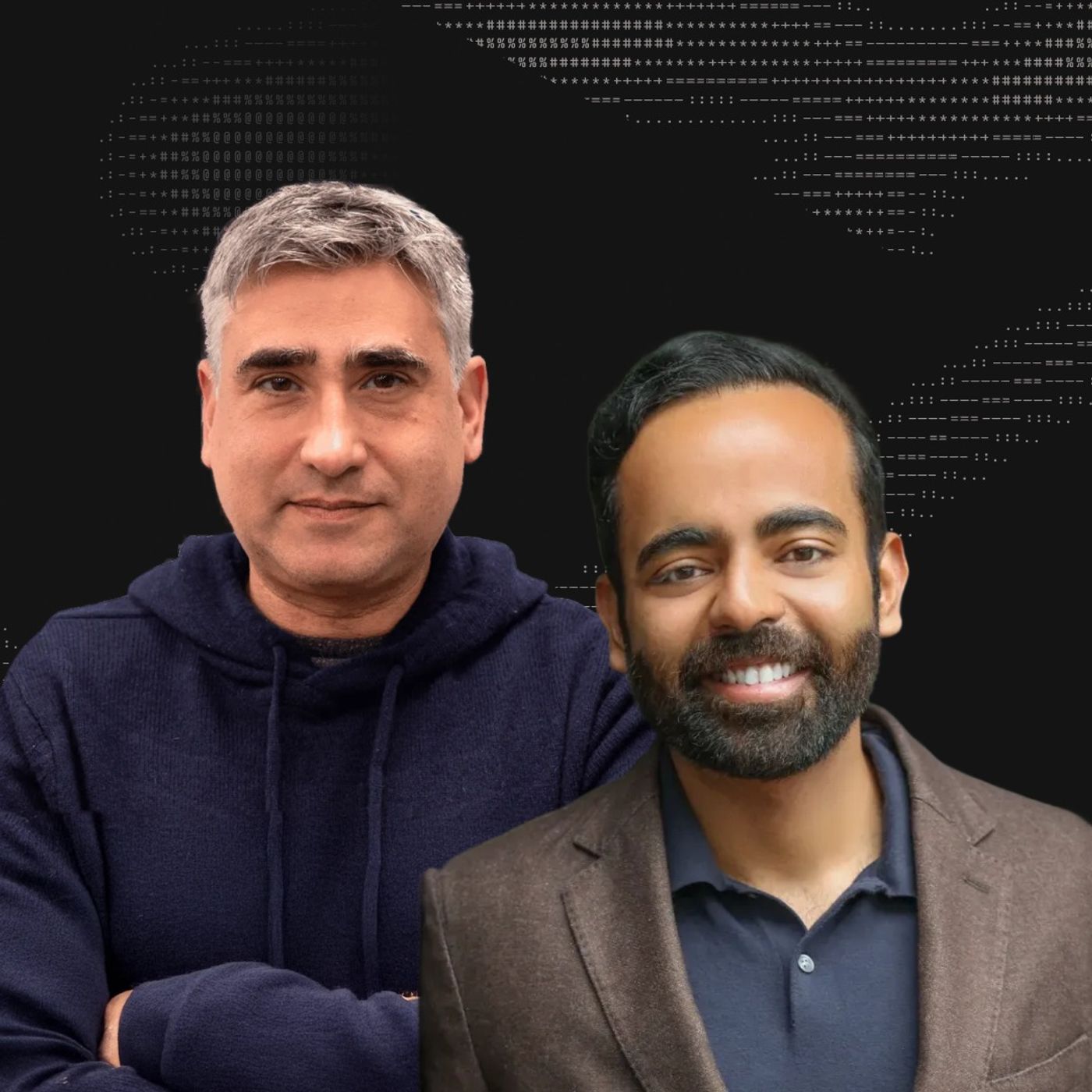
a16z's Martin Casado sits down with Shikhar Shrestha, CEO and cofounder of Ambient, the company bringing agentic AI to physical security.
Shikhar shares how a traumatic armed robbery at age 12—and a security camera that no one was watching—sparked his mission to make every camera intelligent.
They discuss how Ambient's AI monitors camera feeds in real-time to detect threats and prevent incidents before they happen, navigating COVID as a physical security company, building their own reasoning VLM called Pulsar, and why the future of security is AI not just detecting threats but automatically resp...
The AI That Found A Bug In The World’s Most Audited Code
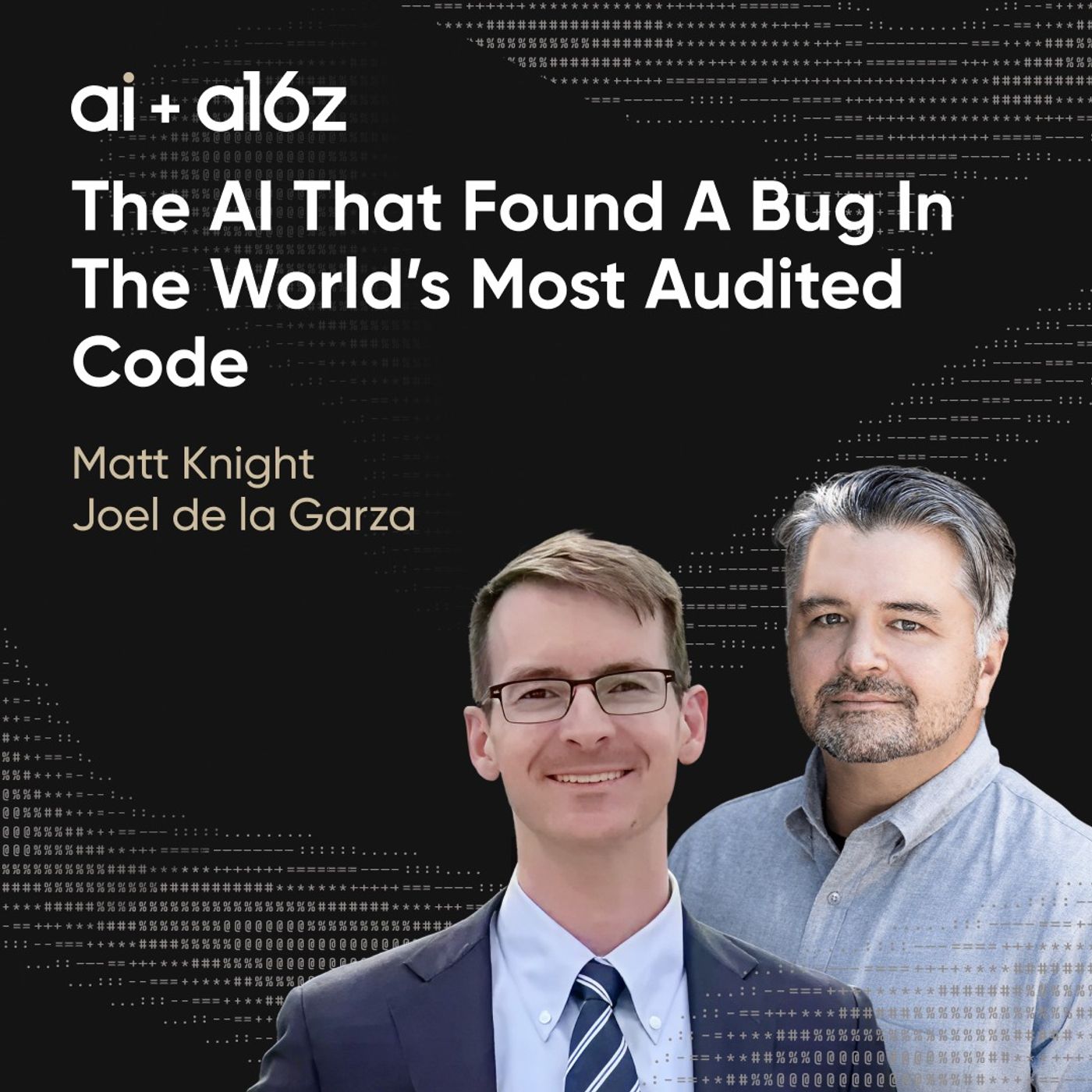
Matt Knight spent five years as OpenAI’s CISO. Now he runs what colleagues call “the most interesting job at the company”: leading Aardvark, an AI agent that finds security vulnerabilities the way a human researcher would—by reading code, writing tests, and proposing patches. It recently found a memory corruption bug in OpenSSH, one of the most heavily audited codebases in existence.
In this conversation with a16z’s Joel de la Garza, Matt traces the evolution from GPT-3 (which couldn’t analyze security logs at all) to GPT-4 (which could parse Russian cybercriminal chat logs written in s...
The Death of Data Gatekeeping: AI Makes Everyone An Analyst | Hex Cofounder

Most companies still rely on dashboards to understand their data, even though AI now offers new ways to ask questions and explore information. Barry McCardel, CEO of Hex and former engineer at Palantir, joins a16z General Partner Sarah Wang to discuss how agent workflows, conversational interfaces, and context-aware models are reshaping analysis. Barry also explains how Hex aims to make everyone a data person by unifying analysis and AI in one workflow, and he reflects on his post about getting rid of their AI product team and the process behind Hex’s funny launch videos.
Timecodes:
<...Why Social Engineering Now Works on Machines
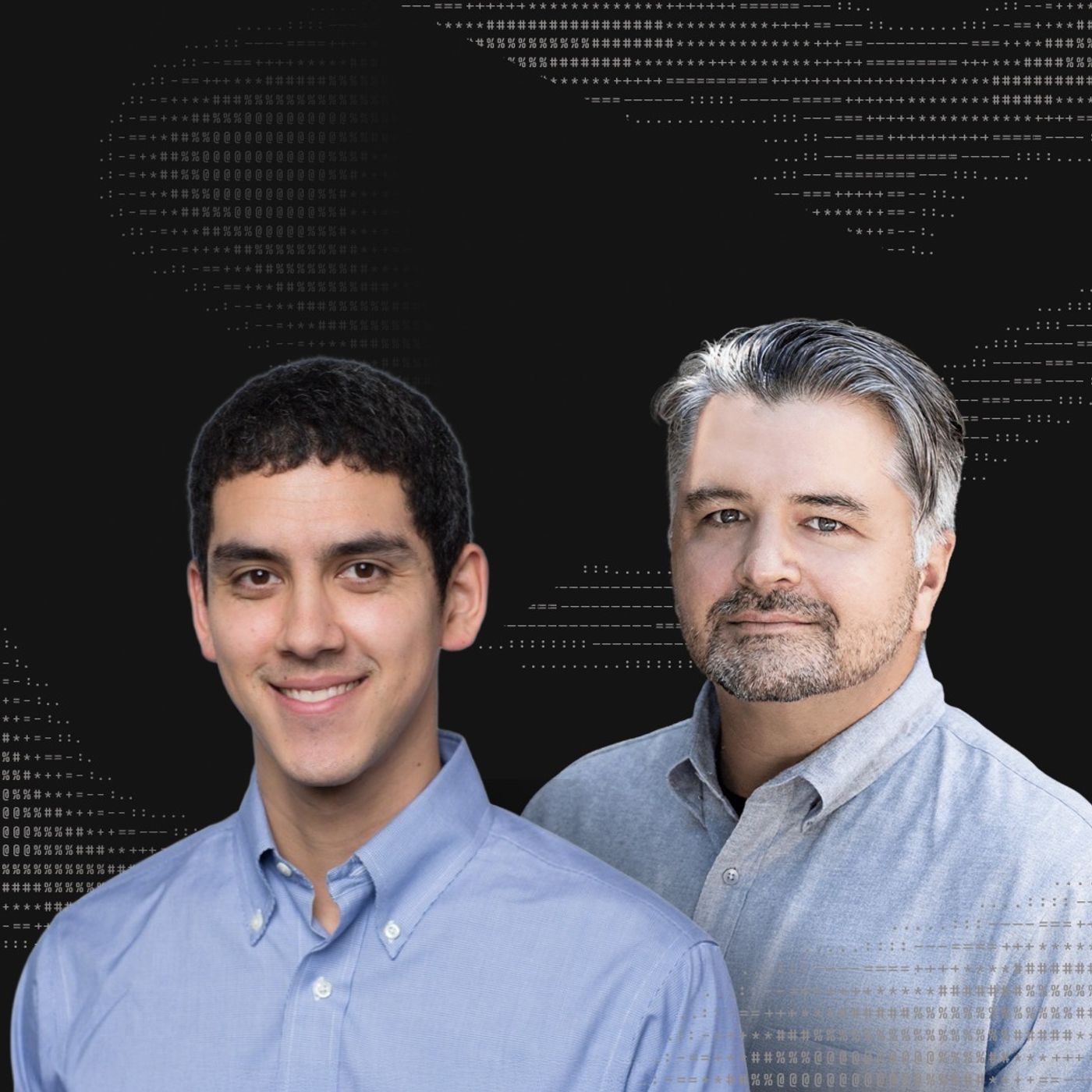
Ian Webster built PromptFoo after watching 200 million Discord users systematically dismantle his AI agent—now Fortune 10 companies pay him to break theirs before customers do. The "lethal trifecta" sounds academic until you realize it's already happening: untrusted input plus sensitive data plus an exfiltration channel equals the security incident that just cost a SaaS company its multi-tenancy guarantees. Webster's red-teaming agents don't use signatures—they have 30,000 conversations with your system, socially engineering their way past guardrails the same way a teenager with emojis convinced ChatGPT to leak data, except his tools find the vulnerability before your users become the pen...
“Anyone Can Code Now” - Netlify CEO Talks AI Agents
Netlify's CEO, Matt Biilmann, reveals a seismic shift nobody saw coming: 16,000 daily signups—five times last year's rate—and 96% aren't coming from AI coding tools. They're everyday people accidentally building React apps through ChatGPT, then discovering they need somewhere to deploy them. The addressable market for developer tools just exploded from 17 million JavaScript developers to 3 billion spreadsheet users, but only if your product speaks fluent AI—which is why Netlify's founder now submits pull requests he built entirely through prompting, never touching code himself, and why 25% of users immediately copy error messages to LLMs instead of debugging manually. The web is...
From Code Search to AI Agents: Inside Sourcegraph's Transformation with CTO Beyang Liu
Sourcegraph's CTO just revealed why 90% of his code now comes from agents—and why the Chinese models powering America's AI future should terrify Washington. While Silicon Valley obsesses over AGI apocalypse scenarios, Beyang Liu's team discovered something darker: every competitive open-source coding model they tested traces back to Chinese labs, and US companies have gone silent after releasing Llama 3. The regulatory fear that killed American open-source development isn't hypothetical anymore—it's already handed the infrastructure layer of the AI revolution to Beijing, one fine-tuned model at a time.
Resources:
Follow Beyang Liu on X: ht...
Ryo Lu (Cursor): AI Turns Designers to Developers

Ryo Lu spent years watching his designs die in meetings. Then he discovered the tool that lets designers ship code at the speed of thought: Cursor, the company where Ryo is now Head of Design. In this episode, we discuss why "taste" is the wrong framework for understanding the future, why purposeful apps are "selfish," how System 7 holds secrets about AI interfaces, and the radical bet that one codebase can serve everyone if you design the concepts right instead of the buttons.
Follow Ryo Lu on X: https://x.com/ryolu_
Check Out Ryo’s We...
How Foundation Models Evolved: A PhD Journey Through AI's Breakthrough Era
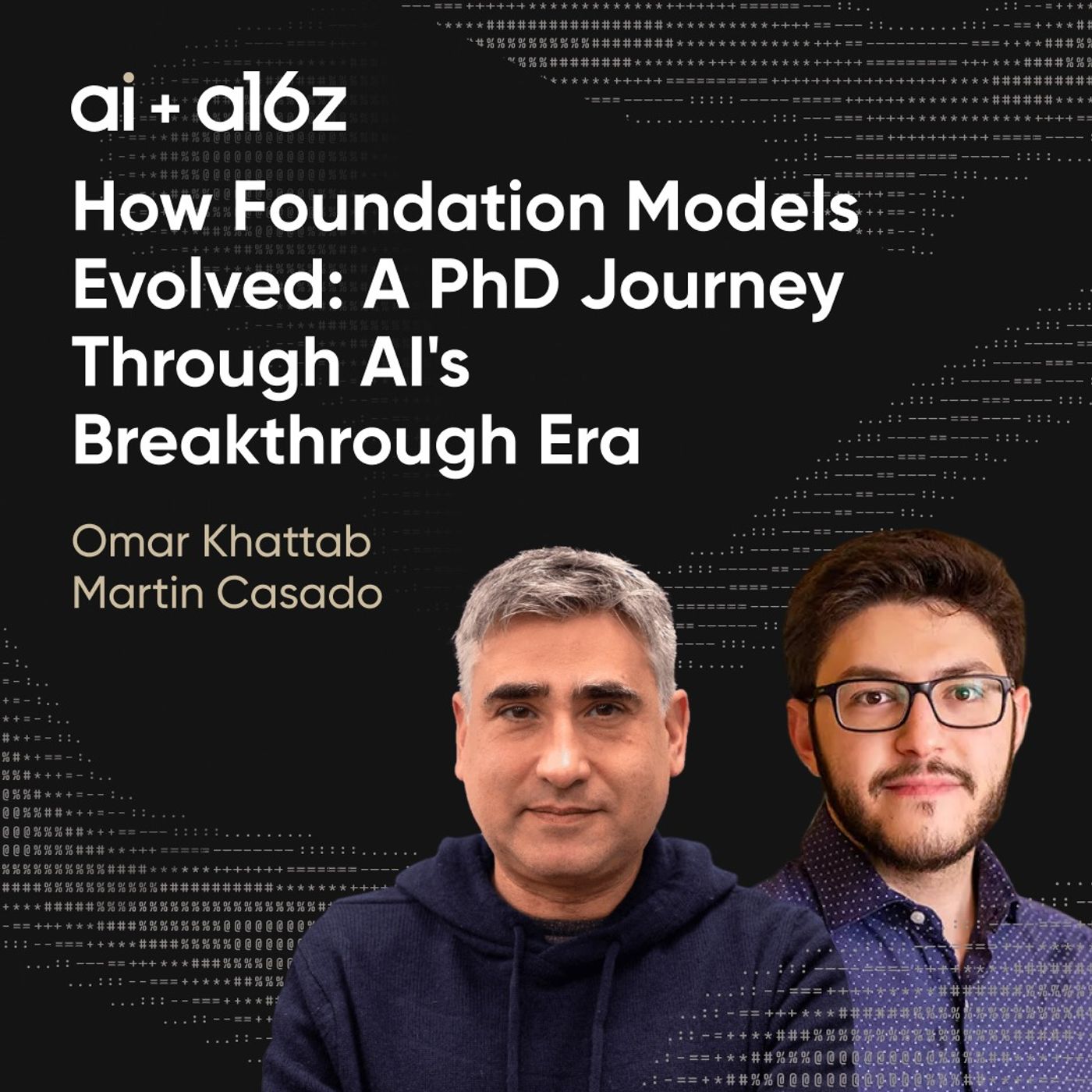
The Stanford PhD who built DSPy thought he was just creating better prompts—until he realized he'd accidentally invented a new paradigm that makes LLMs actually programmable.
While everyone obsesses over whether LLMs will get us to AGI, Omar Khattab is solving a more urgent problem: the gap between what you want AI to do and your ability to tell it, the absence of a real programming language for intent. He argues the entire field has been approaching this backwards, treating natural language prompts as the interface when we actually need something between imperative code and pure Eng...
TruffleHog Creator: You Can’t Have AI Agents Without Secrets
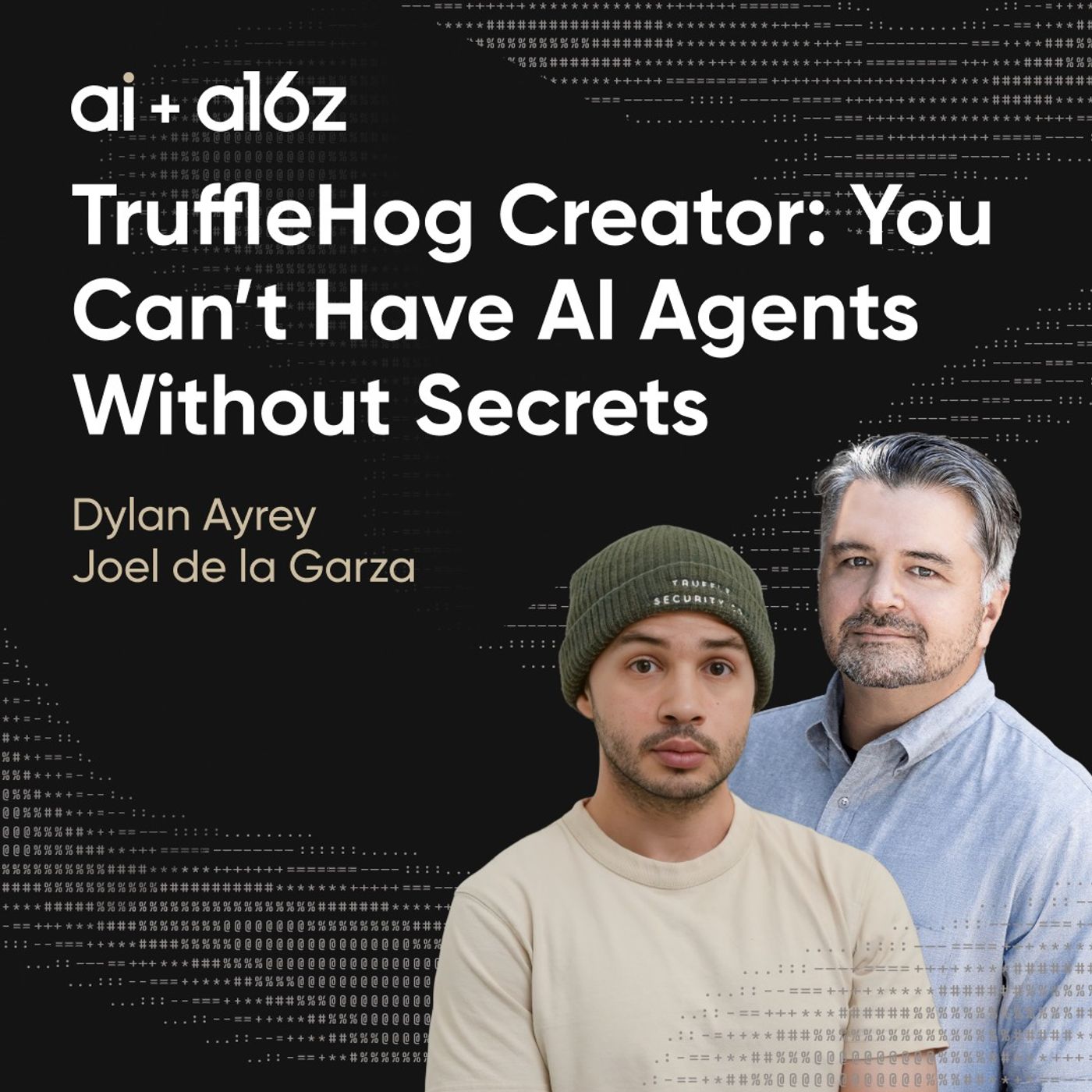
If you can’t robustly protect your secrets, you can’t have reliable AI agents.
In this episode, Truffle Security cofounder and CEO Dylan Ayrey joins a16z partner Joel de la Garza to discuss the emergent security stack for AI agents, why leaks are actually getting worse, and how Truffle evolved from an open-source side project to a major VC-backed startup.
Follow Dylan here: https://x.com/InsecureNature
Follow Joel here: https://www.linkedin.com/in/3448827723723234/
Check out everything a16z is doing with artificial intelligence here, inclu...
