Athens and Jerusalem (in Education)
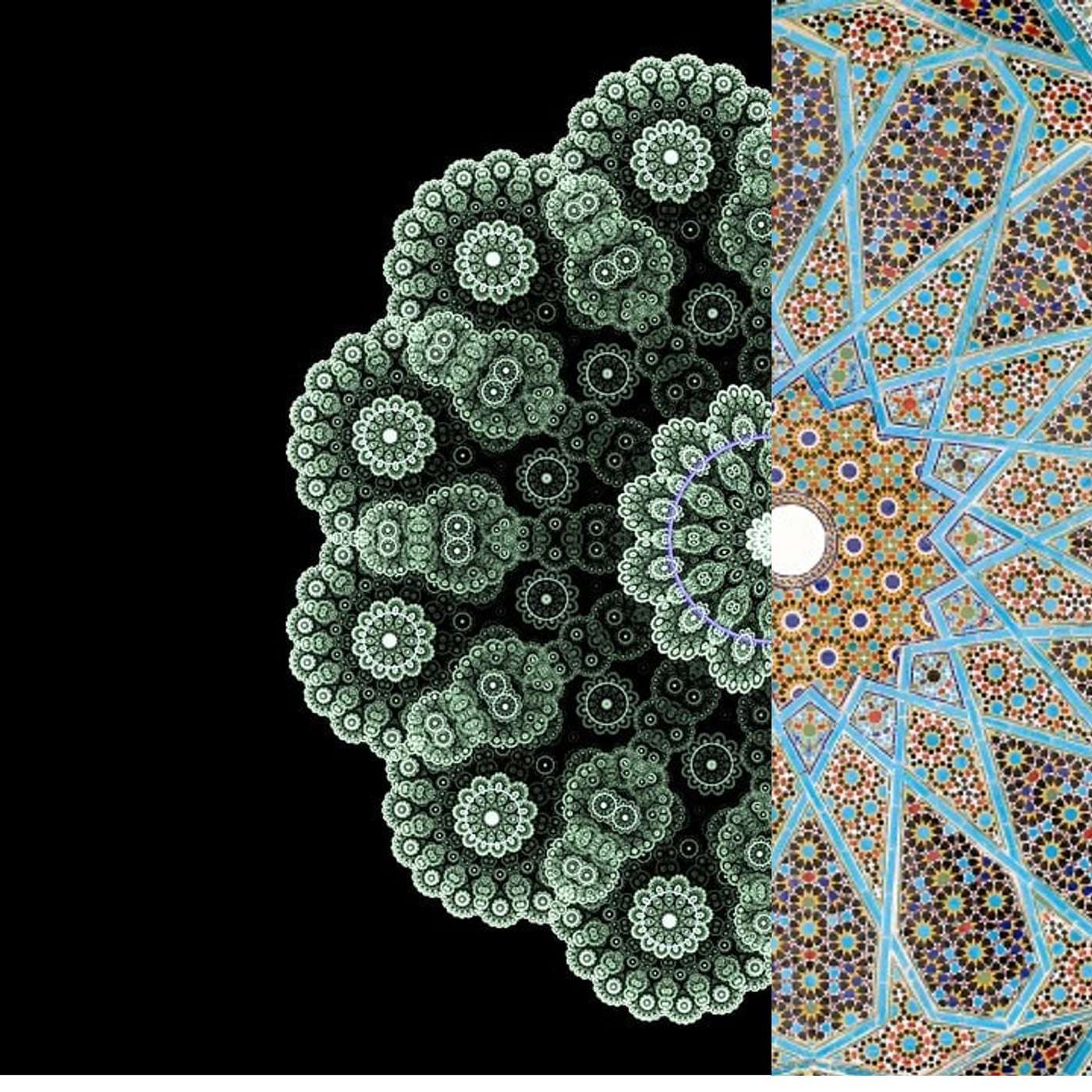
In this podcast we explore the relationship between a scientifically rational and a spiritual approach to reality. That is the relationship of Athens and Jerusalem. Our currently prevalent Western worldview is supposed to be based on rationality. If production of weapons of mass destruction, degradation of the natural environment, and increasing deterioration of mental well-being are signs of rationality, the term is to be considered a dangerous one. In all these, one can detect lack of ethical and existential considerations which renders this worldview essentially an irrational one. On the other hand, various forms of religious dogmatism and fundamentalism lack...
Hitlers philosophers
In this episode we talk about Hitler's philosophers. There are three philosophers in particular which the podcast is based on. These are Martin Heidegger, Alfred Baeumler and Ernst Krieck. All three cultivated academic freedom and had developed a philosophy that fit with Nazism before Nazism came to power. Heidegger's romantic philosophy is central to our episode. Especially his hubristic idea that man can revolutionize the world spiritually. His goal was to get the German people to think anew. We link this and many of his other thoughts to cultural essentialism and the belief in politics as the distinction between...
AI and religion
In this episode, we ask whether AI can have a religious function. Can AI synthesize all religions into one religion, or can AI itself become the new religious authority in the world? These are just two of the questions we address. We also touch on the relationship between religion and ethics and what humans really need to be moral, and what about AI. Will it be possible for something artificial to motivate humans to do good deeds or political leaders to make wise choices? The last question is especially important because we largely know what should be done rationally...
Prophets
In this episode, we examine the phenomenon prophets. Much of the discussion is about understanding what a prophet is. We also touch on the question of whether there are modern prophets. After listening to our own conversation, we wonder if the prophets really have anything to say about their own position, or it is the followers who determine their status? There are no definitive answers here, but rather a multitude of different perspectives that are central to being able to gather revelation and wisdom.
Revelation
This episode is about revelation. Is it only some who can reveal the truth about the divinity of the world, or is this something everyone can recognize if we open ourselves to such demention of life? How can we know this and how can we express what we know? These are some of the questions we address in this episode as an introduction to talking about prophets in the next episode.
AI and Ethics
In this episode we explore the possibility of using AI as a moral helper or even agent. Our guest on the episode is Varqa Abyaneh. The fundamental question is whether AI can make better moral choices than humans and not least whether they can practice these choices in a better way than humans can. This applies both to individuals and to what is morally best for the community. We present many important questions that touch on the connection between ethical rationality and the limits of ethical rationality and where metaphysics or faith come into play.
Pierre Teilhard de Chardin - Scientific writing on religion and nature
This episode is dedicated to Pierre Teilhard de Chardin. He was a French Jesuit, Catholic priest, scientist, paleontologist, philosopher, mystic, and teacher. The church refused to let him publish his works while he was alive, but they were published after his death. His works are unfortunately not that well known, but he has had a great influence both in art and science.
Bridging Creation and the Big Bang with Brian Cranley
In this episode we try to bridge creation and the big bang with Brian Cranley. We get insight in his book The call of wonder, his inspiration and how he structured a book bridging the belief in a monetheisitc God, philosophical argumentation and natural science. One of the main dilemma is how to connect this notion of a God with a religous thought system and the how this phenomena is presented trough out such a system. To learn more on Brian Cranleys work, please visit: https://briancranley.com/
On different forms of argumentation
In this episode, we discuss different ways to argue about the relationship between religion and science. The most typical approach is to use religious premises to prove scientific facts or to use scientific premises to prove religious beliefs. Steven argues for a more circular form of argumentation, unfolding axioms that must serve as both the conclusion and the premise. A fourth way of arguing could be to explore the tacit knowledge of reality, experiencing the wonder of life and one’s own existence.
Spirituality and action
In this episode, Natia Natsvlishvili is visiting our podcast and we discuss how spirituality motivates our actions. An important question is what we mean by spirituality. We also touch upon the difference between animals and humans, understanding that animals also have a spirituality. On this topic, the four of us don't agree on human superiority, but there must be some kind of abilities in human spirituality that are different from all other creatures. Maybe it is our ability to be the conductor of our action, and it is our spirituality that brings this conducting into a good, rational and...
AI
In this episode we discuss AI. What is the future of existence related to AI, what is the difference between humanity and AI and is it possible to bring ethical values into the algorithms of AI?
The universe within human being
In this episode Kamran and I discussed the universe within human being. What are we searching if we wants to know oneself? What is the essence of human existence and what and how could a curriculum and the fostering generation unfold these essences to the next generation?
Spinoza and human natur in school
In this episode we start discussing Spinoza's thoughts on God, universe and the human existence. In the end we discuss what kind of abilities human being have that should be unfold in school. Maybe there is a connection between Spinoza's philosophy of human being as part of the eternal universe, and to try to raise children based on the nature God has given us, that school could be a space where children are able to search and find their inner gems?
Praying
In this episode we explore the phenomenon of praying. What does it really mean to pray and what is the meaning of this kind of activity. We also touches upon love and the courage to risk loving someone or something in the world and what kind of dimention of hope this receivingness of inner lust could bring into existence.
The Holy
In this episode we discuss the holy. Our starting point is Mircea Eliade and Rudolf Otto. The German theologian and philosopher Rudolf Otto in his influential 1917 German book The Idea of the Holy gives us the term numinous, meaning "arousing spiritual or religious emotion; mysterious or awe-inspiring" also "supernatural" or "appealing to the aesthetic sensibility." Eliade, a historian of religion is famous for splitting the human experience of reality into sacred and profane space and time. In the podcast we discuss how the modern world has become more profane than sacred, and how the sacred could still be an...
Faith and everyday life
In this episode we discuss the relation between faith and everyday life. How does faith motivate our action, or is our action the expression of our faith?
Leo Strauss on Athens and Jerusalem
In this episode we discuss Leo Strauss' lecture on Athens and Jerusalem. This is the first out of three lectures, delivered in the fall of 1950, investigate the agreement, disagreement, and conflict between the biblical and the philosophic “ways of life”: “Philosophy in the full sense is [...] incompatible with the biblical way of life. Philosophy and the Bible are the alternatives or the antagonists in the drama of the human soul. Each of the two antagonists claims to know the truth, namely, the decisive truths, the truths regarding the right way of life. But there can be only one truth, and, h...
Meme and Archetype, comments on Dawkins and Peterson
In this episode we discuss a youtube video of Richard Dawkins and Jordan Peterson. Dawkins is a British evolutionary biologist known for being an atheist. Peterson is a Canadian psychologist known for his psycological perspective on religious belief. Our starting point is the similarities and differences between Dawkins' concept of meme and Peterson's concept of archetype.
The link to the video: https://www.youtube.com/watch?v=8wBtFNj_o5k
Fides et ratio
In this episode we discuss the catholic encyclical letter "Fides et Ratio" written in 1998. This was the first encyclical since Pope Leo XIII's 1879 Aetern Patris to address the relationship between faith and reason. We recommend to read the letter, we only interpret some of the issues been highlighted in the letter.
https://www.vatican.va/content/john-paul-ii/en/encyclicals/documents/hf_jp-ii_enc_14091998_fides-et-ratio.html
Truth, a jam session
In this episode we have a jam session discussing truth. You may have heard some of the tunes or stanzas before, but not in this rhythm and order.
Created or everlasting being?
In this episode we elaborate on some of the ground questions of being a human being. What are we and were are we coming from and what if we are not coming from anything, would that mean that we have always existed and will always exist. Such cosmological questions often unfolds when death becomes part of life. Life understood as a small universe starting with a bang when conceived and ending with another big bang called death.
The relationship between the Divine and Human being
In this episode, we elaborate the relationship between human and divinity. In the beginning of the episode, we believe we need some kind of understanding of what divinity is and what human is. But we end up, thinking that maybe the relationship can be experienced just by raising an awareness towards such a relationship. Underneath this discussion is a search for a common universal narrative of the divine that could incorporate all kind of religious or non-religious existence.
A course of history?
In this episode we discuss if history has a course or not and if this course are of progress or decline. We further discuss what possibility human existence has to develop a good society. Could such a society be based on facts or do we need a narrative based on faith? Underneath these discussions are the question of what is human being and what kind of potential do human have to actualize our faith and facts in an ever changing reality.
Historical knowledge
In this episode we explore the value of historical knowledge could have to present being and even the future. Based on the epic dimension of human being, what kind of power provides knowledge from the past? We touch upon different dichotomies like, spirit and matter, trust and criticism, origin or progress, and love vs suffer as sources of creativity.
Transforming school?
In this episode we continue to discuss what forms of transformation we believe to be done in school.
Abolishing school?
In this episode we discuss the idea of abolishing school. Is this a good idea or is it a dangerous one? Maybe we need that dangerous idea to keep the meaning of school alive and not turning the school into a factory to produce children as cogs in the society machinery?
Music, science and metaphysics - a conversation with Lasse Thoresen
In this episode we have the pleasure to listen to our guest Lasse Thoresen. He is a composer and a researcher in the field of music. In our podcast he connects the creation and listening to music both to Athens and Jerusalem. Please, check out his music!
Religiosity and conscience
In this episode we explore the religious dimension of conscience. We show the different between the human mind and what we are able to know for sure and how experiences could have a transformative effects of human mind.
Scientific discoveries and religious possibilities
In this episode we discuss different scientific discoveries and what influence this had on religious thoughts and what possibilities still exist of religious thinking according to a scientific worldview
Ibn Rushd part II
In this episode we discuss Ibn Rushd's thoughts further and connect it more to education.
Ibn Rushd
In this episode we introduce Ibn Rushd work and thoughts to the listeners. We understand him as a great thinker and an example of how to integrate Athens and Jerusalem.
On environment and worldview
We explore further the question of human worldview and what this has to say on sustainable environmental behavior.
Education and religious questions
In this episode we highlights issues connecting education and religious thoughts. How are we supposed to give students the ability to explore existential and spiritual beliefs in our modern education system?
The one and the many (Jerusalem)
In this episode we explore further the distinction between the one and the many. This time we try to emphasize more of the religious dimension.
The one and the many (Athens)
In this episode we explore the difference between the one and the many or between the question of essence and unity or complexity and plurality. Most of our discussion is connected to reason and the scientific perspectives on these issues.
Introduction to Athens and Jerusalem (in Education)
In this episode we introduce our self and what the podcast is all about. We consider this a philosophical podcast but it emphasize both important scientific and religious questions. And the main task is to change the education system to create room for this kind of explorations and experiences.


