Keen On America

Nobody asks sharper or more impertinent questions than Andrew Keen. In KEEN ON, Andrew cross-examines the world’s smartest people on politics, economics, history, the environment, and tech. If you want to make sense of our complex world, check out the daily questions and the answers on KEEN ON. Named as one of the "100 most connected men" by GQ magazine, Andrew Keen is amongst the world's best-known technology and politics broadcasters and commentators. In addition to presenting KEEN ON, he is the host of the long-running show How To Fix Democracy and the author of four critically acclaimed books about th...
The Many Faces of AI: Sebastian Mallaby on Demis Hassabis and the Quest to Read God’s Mind
“Doing science is like reading the mind of God.” — Demis Hassabis, quoted in The Infinity Machine
This week’s New Yorker uncomplimentary profile of OpenAI’s CEO is entitled “The Many Faces of Sam Altman.” But not all AI leaders are quite as many faced as slippery Sam. Take, for example, Demis Hassabis, the North London based co-founder and CEO of Google’s DeepMind. In his new biography, The Infinity Machine: Demis Hassabis, DeepMind, and the Quest for Superintelligence, the British journalist Sebastian Mallaby argues that Hassabis is, in contrast, one faced. And that face is not only dece...
More Embarrassing Than Sex: Alex Mayyasi on Why Money Talk Makes Us So Nervous

“There are parts of the business and finance world that are invested in making these things seem intimidating and scary. We really enjoy making things more approachable.” — Alex Mayyasi
What’s the last taboo? The thing that we are totally embarrassed to discuss? No, not sex. It’s money. At least according to Alex Mayyasi — frequent contributor to NPR’s Planet Money — who has just published Planet Money: How to Live Richer, Spend Smarter, and Afford the Life You Want, a field guide to the big economic forces that shape our working, saving, loving and leisure lives.<...
An Anticapitalist Mutiny: Noam Scheiber on the Rise and Revolt of the College-Educated Working Class
“Historically, when the college-educated become politically radicalised, that does tend to lead to real shifts.” — Noam Scheiber
A university degree has always been seen as a passport out of the working class. But according to the New York Times’ Noam Scheiber, the reverse is now true. In his new book, Mutiny, Scheiber argues that the good white-collar jobs college once promised have been quietly disappearing over the last fifteen years. The result, he argues, is the rise and revolt of what he calls a “college-educated” working class.
Scheiber chose mutiny because it’s a term to desc...
Truth is Dead: Steven Rosenbaum on AI as a Spectacularly Good Liar
“When we trust AI to tell us the truth, we are setting ourselves up to hand over something deeply human to a machine that does not have our best interests at heart.” — Steven Rosenbaum
Truth, Steven Rosenbaum cheerfully admits, is a shitty word. It has two ontological realities — one objective, the other subjective — but most of us use the word without much thought. Maybe it’s like pornography. It might be hard to define, but you know it when you see it. Or perhaps you know it, when you don’t see it.
His new book...
The Joe Biden Tragedy: Julian Zelizer on the Last New Deal President
“His ultimate failure is not simply losing. It’s his failure to stop Trumpism from being such a dominant force in America.” — Julian Zelizer
On this Easter Sunday, can we resurrect Joe Biden’s reputation? Perhaps not — according to Julian Zelizer, the Princeton historian and editor of The Presidency of Joseph R. Biden, a collection of essays about the historical significance of the Biden Presidency.
Zelizer argues that Biden’s legislative record was more robust than most Americans remember — climate investments, semiconductor plants, diversity integrated into government programmes. Rather than policy, the problem was the politics...
We Shape Our AI, Thereafter It Shapes Us: How to Maintain Human Agency in Our Agentic Age
“We shape our tools, and thereafter they shape us.” — Marshall McLuhan (attributed)
Who gets to tell the AI story? A movie, a media company or Marshall McLuhan?
1. The movie: the AI doc, How I Became an Apocaloptimist, which That Was The Week publisher Keith Teare dismissed because it failed to define AI.
2. A media company: OpenAI bought the streaming show TBPN for hundreds of millions of dollars in a move that is akin to Lenin starting Pravda.
3. Marshall McLuhan: Ezra Klein visited Silicon Valley and was reminded of McLuhan’s (suppo...
Stop, Don't Do That: Peter Edelman on What Bobby Kennedy Can Still Teach America
“Millions of people have gone out and said, ‘Stop, don’t do that.’ And that is a wonderful thing.” — Peter Edelman
We are in Washington DC this week, in search of America’s heart. And there may be no better guide than Peter Edelman — one of the few remaining members of the Bobby Kennedy braintrust. Edelman was a close Kennedy aide from just after JFK’s assassination through the 1968 presidential campaign. He watched Bobby find himself after his brother’s death — grow from a man defined by serving JFK into the last progressive populist able to unite Black and whi...
That's My Story, But Not Where It Ends: Robert Polito on Bob Dylan's Second Act

“That’s my story, but not where it ends.” — Bob Dylan, “Key West (Philosopher Pirate)”
Fitzgerald said there were no second acts in the American story. But it is, of course, a narrative of second chances. And there’s no more of an American story than Bob Dylan, whose second act may be more memorable than his first.
Robert Polito — poet, National Book Critics Circle Award-winning biographer, and former director of creative writing at the New School — has written what may be the (anti) definitive book on Dylan’s second act. After the Flood: Inside Bob Dy...
Does God Love Haiti? Dimitri Elias Léger on the Haitian Scorer of the Greatest Goal in US History
“When Haiti plays Brazil, Haitians will feel equal. Football gives even the weakest and the poorest a fighting chance. That is profound.” — Dimitri Elias Léger
Yesterday, Simon Kuper defined the World Cup as a religious feast for all of humanity. Today, Dimitri Elias Léger asks whether God is watching. His new novel, Death of the Soccer God, is a fictional reimagining of the most famous goal in American World Cup history — scored in 1950 by a non-American. Joe Gaëtjens was a half-German, half-Haitian teenager sent to New York to study, not to play football. H...
One Life in Nine World Cups: Simon Kuper on Football Fever and Why the Beautiful Game Still Matters
“The World Cup is a kind of religious feast. It’s like Easter, or Passover, or Eid, but it’s for all of humanity.” — A Church of England vicar, quoted by Simon Kuper
Nick Hornby measured his (sad) life in Arsenal fixtures. The FT columnist Simon Kuper has measured his in World Cups. His new book, World Cup Fever: A Soccer Journey in Nine Tournaments, is the Kuper story told through the nine tournaments he attended as a journalist — from Italy 1990 to Qatar 2022.
World Cup Fever is as irresistible as a Maradona slalom or a Pelé fe...
What If It’s a Bunch of Shit? Margaret Rutherford on the Relentless Camouflage of a Perfect Life

“There is tremendous loneliness in the kind of life where you just don’t feel like anybody knows you.” — Margaret Rutherford
Yesterday, the Brooklyn psychotherapist Daniel Smith defined perfection as the devil. Today, the Arkansas-based Dr. Margaret Rutherford explains what happens in our FOMO age when the devil wins. Her subject is what she calls the “perfectly hidden depression” of today’s Instagrammable types. Perfectionism rates are going up, Rutherford warns. And so, not uncoincidentally, are suicide rates.
Rutherford’s own mother in Fifties suburban Arkansas was a case study. Beautiful, smart, talented and anorexic. Th...
Perfection Is the Devil: Daniel Smith on Boredom, Envy, and Why Our Darkest Emotions Aren’t So Dark
“Perfection is the devil. Growth means a greater capaciousness, not a narrowing and an optimisation.” — Daniel Smith
Don’t feel bad about feeling bad. That’s the message of Daniel Smith’s therapeutic new book, Hard Feelings: Finding the Wisdom in Our Darkest Emotions. Smith — psychotherapist, anxiety memoirist, married Brooklynite — wants to rescue boredom, envy, shame, and regret from the category of emotions that are supposed to shame us. The things that bore us most — raising children, long marriages, breakfast with your spouse for the two thousandth time — are also the most meaningful. Boredom, Smith argues, is the price...
At the Heart of the American Center: Corey Nathan on How to Talk Politics and Religion Without Killing Each other
“We can survive. Can we thrive? That’s a different question.” — Corey Nathan
Robert Mueller died last week. Educated at Princeton, this Vietnam veteran won a Purple Heart and then enjoyed decades of public service under presidents of both parties. But the current president celebrated Mueller’s death. Such are the vagaries of American history.
In contrast, Corey Nathan — host of the Talking Politics and Religion Without Killing Each Other podcast — isn’t celebrating Robert Mueller’s death. Nathan is from suburban northern Los Angeles County, very much at the heart of the (mythical?) America...
Don’t Fight the Last War: Why Anthropic vs US Government Matters
“Happiness is a rare commodity. There’s a lot of fuel for the claim that unhappiness is caused by some software, when in fact the roots of unhappiness are way deeper than that.” — Keith Teare
If it’s not warfare in Iran, then it’s lawfare in California. Out here in Silicon Valley, it’s been a week dominated by two trials of big tech. First, Meta and YouTube were found liable for designing products that addict children. While the young female social media victims hugged outside the Los Angeles courthouse, the Wall Street Journal dismissed it a...
Excessive Wealth Disorder: Glen Galaich on the $2 Trillion That Could Save Democracy
“Why does someone need to be the first trillionaire? The damage it’s doing just to get to that level is extreme.” — Glen Galaich
Excessive wealth disorder. It sounds like a disease — which, at least according to Glen Galaich — CEO of the Stupski Foundation and author of Control: Why Big Giving Falls Short, it is. There’s $2 trillion sitting in American charitable accounts Galaich says, mostly invested in hedge funds and real estate. Foundations are legally required to distribute only 5% a year — the bare minimum — and invest the remaining 95% to ensure they can make that back and live fore...
Bring the Friction Back: Stephen Balkam on Kids, Social Media, and Tech’s Big Tobacco Moment
“Friction is what brings us together. If we were never able to communicate in real space, we would not truly learn what it is to be human.” — Stephen Balkam
Is social media a drug? In what the Financial Times called a landmark case, Facebook (Meta) and YouTube (Google) have been found guilty of designing their products to be addictive to kids. Is this a big tobacco moment? the tut-tutting New York Times asked. In contrast, the free market Wall Street Journal called it a shakedown.
So what to make of this decision to make s...
How Stories Can Save Us: Colum McCann on Narrative Four, Einstein, Freud, and the Power of Empathy
“The shortest distance between you and me is a story.” — Colum McCann
In 1932, Albert Einstein wrote to Sigmund Freud asking if humanity could cure its “lust for hatred.” Freud said no. Mankind’s instinct for death and destruction could not be eliminated. That said, the Viennese doctor went on, the desire to end war should never be abandoned. What was needed was a “mythology of the instincts” and a “community of feeling.” In other words: a story. The book sold 2,000 copies. By 1933, the Nazis had seized power and the two men had fled into exile.
Colum McCann —...
Politics in the Age of Total Control: Jacob Siegel on the Information State that Came Home
“What conclusion do you draw if you see a system that continues to grow more powerful despite failing at the things it says it’s going to accomplish?” — Jacob Siegel
Jacob Siegel grew up in Brooklyn, studied history at Boston University, enlisted in the US Army after September 11, and fought in Iraq and Afghanistan. In Afghanistan, as an intelligence officer, he had the latest drones, sensors, Palantir databases, and predictive models at his fingertips — but still couldn’t get a coherent answer about what, exactly, America was trying to accomplish in its war with the Taliban. To...
America's Suez Moment? Soli Özel on Why Nothing Will Ever Be the Same Again
“If the regime doesn’t lose, it wins.” — Soli Özel
It was just past midnight in Istanbul when I reached Soli Özel. The Pentagon had just announced it was deploying 3,000 soldiers — the 82nd Airborne — to the Gulf. Özel — professor of international relations at Kadir Has University, columnist, and one of the most trusted analysts of Middle Eastern politics — is blunt. This might, he warns, be America’s Suez moment.
In 1956, Britain and France — two spent imperial powers that refused to accept they were spent — were humiliated in Egypt. Trump is a noisier, more corpulent Anthony Eden. T...
How to Be Agreeably Disagreeable: Julia Minson on How to Argue with Your MAGA Father-in-Law

“The problems start when I conclude that only an uninformed, unintelligent, or evil person could hold the view that you hold.” — Julia Minson
In a sneak preview of the 2028 Presidential election, Andy Beshear called JD Vance the most arrogant politician in America. Vance’s spokesperson fires back that Beshear is chasing headlines. Just another disagreeable day in American public life. So how can we make conversation more civil? How to disagree more agreeably?
In her new book (out today) How to Disagree Better, the Harvard public policy professor Julia Minson argues that disagreement is not c...
Let’s Ban Billionaires: Noam Cohen on the Know-It-Alls 2.0
“AI is a theft of knowledge. I can’t believe we as a society allowed this.” — Noam Cohen
Ten years ago, Noam Cohen came on the show to ask if it was “Too Late to Save the Internet from Itself?” Back then, this early Silicon Valley critic was a New York Times writer. He was, as it turns out, a “premature anti-technologist” — Cohen’s phrase, borrowed from the premature antifascists who were called communist for opposing Hitler before it was fashionable. We should have listened to him. Now a freelance writer, Cohen describes himself, without self-pity, as a casu...
Was St. Francis of Assisi the First Silicon Valley Critic? Dan Turello on 800-Years of Tech Anxiety
“We read so as not to feel alone.” — C.S. Lewis (possibly)
Dan Turello is a cultural historian of medieval Italy, a much published photographer, and the author of the new Connection: How Technology Can Make Us Better Humans. I’m sceptical. Especially the promise (or illusion) of better humans. But Turello’s definition of technology goes back further than most — all the way to the original fig leaf. When Adam and Eve were expelled from the Garden, the first thing they did, he reminds us, was cover their bodies. Technology, then, in Turello’s framing, is ev...
The Philadelphia Story: Richard Vague on the Wealthiest & Most Invisible American Founding Father
“Washington and Hamilton were governed by Willing.” — John Adams, 1813
Thomas Willing voted against the Declaration of Independence. He was the wealthiest man in Philadelphia, the largest merchant trader in North America, an Anglican slave trader printing money. So he saw little reason to declare independence from Britain. Especially since the renegades — the poor Scots-Irish Presbyterians flooding into the country, the MAGA people of their day — had no love of wealthy aristocrats like himself. And then Willing did something that took everyone, even perhaps himself, by surprise: he financed the very revolution he’d voted against.
In The...
Symbolic Capitalism vs. Symbolic Democracy: Will the $10 Trillion AI Startup Change Everything?
“I don’t know if any rational person ever became a billionaire running a disruptive company.” — Keith Teare
Is capitalism by permission of democracy, or is democracy by permission of capitalism? That’s the question Keith Teare and I have been circling for a while on our weekly tech roundup, and this week it triggered a full-blown discussion of our 21st century economic and political fate.
Earlier this week, Vinod Khosla — one of Silicon Valley’s most successful venture capitalists — posted on X that “capitalism is by permission of democracy.” Keith agrees. I’m not so sure. My sens...
Nature's Last Dance: Natalie Kyriacou on Ecocide, Oiled Penguins, and Why We Need to Watch the Birds

“We do not exist without nature — unless Silicon Valley figures something out in their bunkers.” — Natalie Kyriacou
Forget the Middle East for a moment. Or rather, don’t — because today’s petroleum war is an environmental catastrophe, perhaps even an ecocide. Militaries are the largest source of emissions on the planet. Trump uses Iran’s oil fields as a bargaining chip while assassinating its leaders, as if the price of petroleum is more important than human life (which it clearly is to him). Natalie Kyriacou, an Australian environmentalist and author of Nature’s Last Dance, isn’t surprised. T...
What Came First: Stories or Language? Kevin Ashton on the Story of Stories
“Nobody’s reality is more or less real.” — Kevin Ashton
It’s the chicken and egg question. What came first: stories or language? For Kevin Ashton, the answer is stories. In his new book, The Story of Stories, Ashton argues that rather than inventing stories with language, we invented language to tell stories. Stories, for Ashton, predate language. They are what makes us human.
300,000 years ago, Ashton argues, humans sat around night fires needing to talk about things they couldn’t point to — the past, the future, the Gods. So they created language. Grunts got gra...
Have our iPhones Eaten our Brains? Nelson Dellis on Hacks to Restore our Focus and Boost our Memory
“I don’t like the idea of losing out to a machine because I feel like I’m losing a part of myself in the process.” — Nelson Dellis, six-time USA Memory Champion
Most of us can’t remember our spouse’s phone number. We barely know our own. We haven’t read a physical map in years. Some of us don’t even know what a map is. Such is the impoverishment of mental life in our digital age.
Nelson Dellis, unlike most of us, is a rich man — at least mentally. He can memorise a shuff...
Hard Times Again? Jeff Boyd on Chicago, Charles Dickens and Curtis Mayfield
“If we don’t fight, then what are we doing?” — Jeff Boyd
How do you write fiction about contemporary America when reality itself is stranger than fiction? A country in which “alternative facts” is policy rather than satire. Where “truth” has been nationalized.
Jeff Boyd, an acclaimed young American novelist, sees fiction as refuge. For both writer and reader, it gets us inside the heads of people who both inflict and endure pain. And it enables the senseless to make sense. The news cycle can’t do that. A novel can.
Boyd’s second nove...
An Act of War? Brandeis President Arthur Levine on Trump’s University Policy
“Had another nation done this, we would regard this as an act of war.” — Arthur Levine, President of Brandeis University
Forget Iran for a moment. I asked Brandeis President Arthur Levine whether the Trump administration has gone to war with the American university. He paused diplomatically. “Going to war is a very restrictive term,” he answered. Then added: “Had another nation done this, we would regard this as an act of war.” From the president of Brandeis, that’s not a metaphorical dodge. He is, of course, referring to the singling out and bullying of Harvard, Columbi...
Is Elon Human? Charles Steel on the Curious Mind of Elon Musk
“You would not want to be me.” — Elon Musk
Yesterday I argued that Dario Amodei is the most interesting man in America because he’s doing something nobody else has the balls to do: acting like a human being in public. Elon Musk is the opposite. He has the balls — nobody would deny that — but what’s missing is the human-being. Or perhaps Elon is all-too-human, which explains why so many of us — including myself — loathe him.
Charles Steel, a London investor, doesn’t loathe Elon. In fact, he’s self-published a book about him: The Curious...
Why Dario Amodei Might Be the 21st Century’s First Real Leader
“Whether you like Amodei or not, at least he’s a leader.” — Andrew Keen
Dario Amodei is the most interesting man in America right now. Not because he runs a $500 billion company or because he’s suing the Trump administration or because Anthropic’s Claude topped the iPhone charts. But because he’s doing something nobody else in Silicon Valley has the balls to do: he’s acting like a human being in public. He has principles, he states them, and he accepts the consequences. That’s leadership. It shouldn’t be remarkable. In 2026, it is.
This week’...
From Orphanage to Google Brain: David Sussillo on Heroin, Neural Networks and the Mysteries of the Heart
“I can point to things. But is that a systemic explanation? I think there the answer is a little less clear. I mean, surely people need love and all of that, but then there’s this risk of just devolving into platitude.” — David Sussillo
David Sussillo is a big time neural reverse engineer. The Stanford brain scientist worked at Google Brain with Geoffrey Hinton, and now is at Meta Reality Labs. What distinguishes Sussillo, however, is not his Silicon Valley good luck, but the bad luck of his origins. In his memoir, Emergent: A Memoir of Boyho...
Murder on the Abortion Express: Amy Littlefield on Who Killed Roe
“They all did it. They’re all guilty.” — Amy Littlefield
Who killed Roe? Amy Littlefield, the abortion access correspondent at The Nation and big time Agatha Christie fan, has written a true crime book about it. Literally. Killers of Roe treats the death of the constitutional right to abortion as a murder mystery in the Poirot or Miss Marple tradition, complete with suspects, motives, and a forensic reconstruction of the 50-year crime scene. The suspects have Christie-style names: the Racist (Jesse Helms), the Little Brother (James Buckley), the Devout Bureaucrat (Paul Herring), the Closeted Congressman (Bob Baum...
The Magical Realist United States: Jazmine Ulloa on El Paso as America’s New Ellis Island

“It’s about blood. I cover a lot of bloodshed in the book, but I also talk about a different kind of blood: blood that ties, blood that binds families across time and distance.” — Jazmine Ulloa
Kristi Noem is gone. Under her tenure, 32 people died in ICE custody in 2025 — double the previous year’s toll. But Jazmine Ulloa, the New York Times’ national immigration reporter, doesn’t think much will change. Noem wasn’t really the point, she insists. The MAGA spectacle rolls on. Stephen Miller’s violently anti-immigrant agenda remains. And hysterical conservatives like Peter Schweizer are...
Move Fast and Break the World: Jonathan Taplin on Trump as an Interregnum
“This is not the beginning of a new right-wing revanche fascist era; this is the end of something. But the problem is we can’t get to the new world because the new world is too filled with problems.” — Jonathan Taplin
Trump fantasizes about himself as a king. But he’s actually just an interregnum, at least according to Jon Taplin — author of Move Fast and Break Things, Hollywood insider, and old friend. In a “terrifying” new piece in Rolling Stone, Taplin draws an unusual historical parallel: Trump as Oliver Cromwell. Cromwell cut off the king’s head, sla...
So Are All Immigrants Manchurian Candidates? Peter Schweizer on How Mexico, China, and the Muslim Brotherhood Are Weaponizing Immigration
“Fidel Castro told his aides, ‘We’re going to fill his arms with shit.’ That is an example of weaponised migration. What we’re experiencing now is on a thermonuclear scale.” — Peter Schweizer
Is best selling writer Peter Schweizer a conspiracy theorist? He doesn’t think so. His new book, The Invisible Coup: How American Elites and Foreign Powers Use Immigration as a Weapon, argues that Mexico, China, and the Muslim Brotherhood are using mass migration as a strategic tool to undermine the United States. Not in a coordinated conspiracy—but as a confluence of interests, what he...
Gatsby Without the Romance: Michael Wolff on Why Trump and Epstein Are the Same Person
“I have always said that they are the same person. And the drama of this story is that one ends up dead in the darkest prison in America, and the other in the White House.” — Michael Wolff
A few days ago we had Jason Pack on the show suggesting that the Anglo-American media elite had a degree of complicity in the Epstein scandal. Michael Wolff disagrees. The media weren’t complicit, he says. They were just dumb. They found the story unseemly, were uncomfortable with it, and avoided it out of disdain—not conspiracy. David Remnick of...
How to Reclaim the Internet: Olivier Sylvain on Platforms and Policy
“The fatal error is ours. Legislators set out a regulatory regime that keeps regulation at bay. The only other industry with a similar protection is the gun industry.” — Olivier Sylvain
There are certain words in book titles that provoke. “Reclaiming”, for example. My guest today is happy to defend the provocation. Fordham law professor and former FTC senior advisor Olivier Sylvain argues in his new book, Reclaiming the Internet, that the internet was never really ours to begin with—and that the story about user control, free speech, and digital democratisation was always more nostalgia than reality...
No AI Good Guys? Andrew & Keith Ask If Altman Amodei, & Hegseth Have All Failed the Leadership Test
“They’re both naughty boys in the playground, leveraging the absence of clarity to their own advantage. Neither one of them is an authoritative leader of opinion with the interests of everyone at heart.” — Keith Teare
What a difference a week makes. Last Saturday, Keith Teare was arguing that Anthropic was wrong to push back against the US government’s use of AI in warfare. This week his editorial is entitled “No Good Guys.” He’s used AI to put images of Sam Altman, Dario Amodei, and Pete Hegseth around the same table—and found all three guilty o...
What Would Daniel Ellsberg Say About Iran? His Son Michael on America’s Most Famous Whistleblower
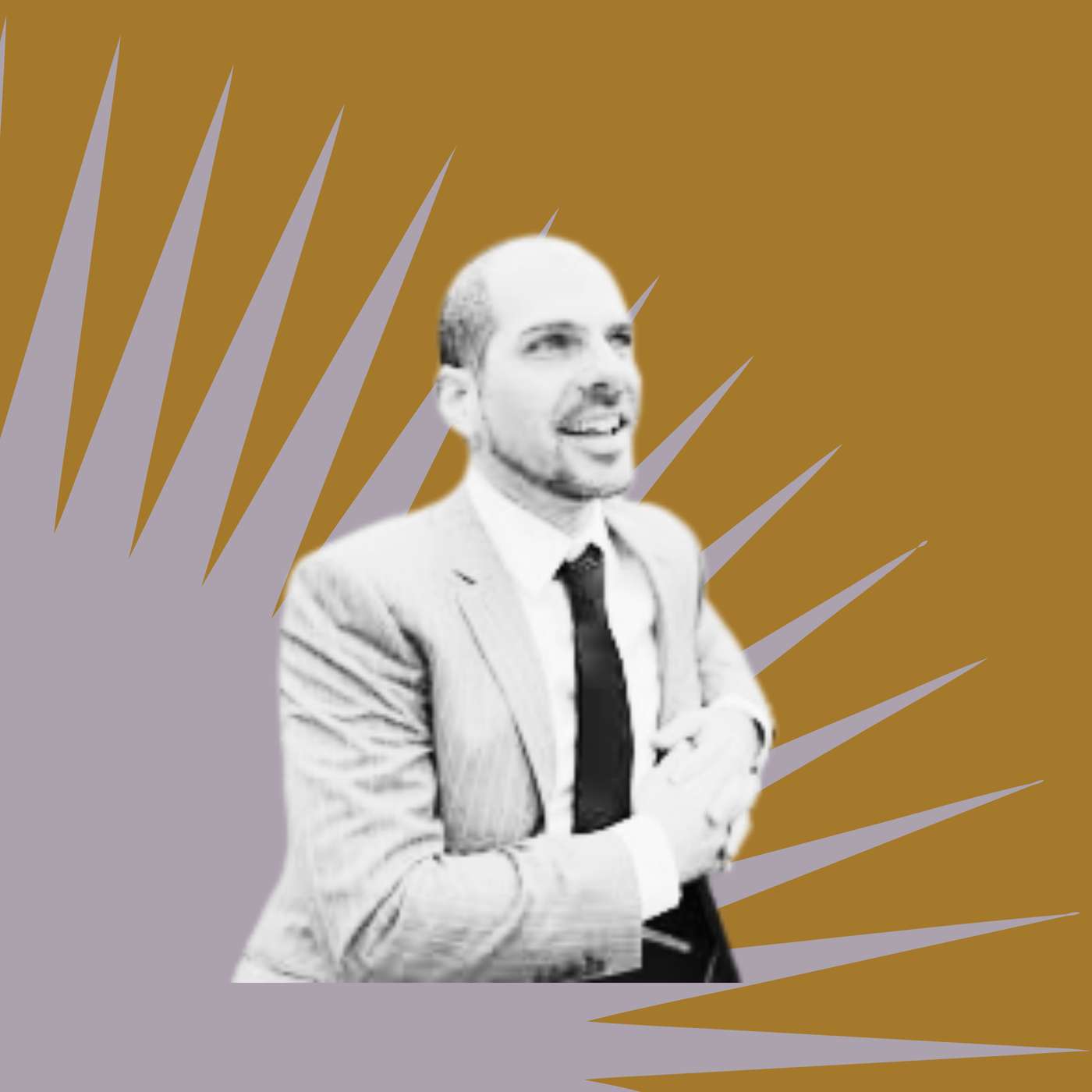
“All my life, I’ve absolutely opposed all terrorism by anyone under any circumstances. I define terrorism as the deliberate killing of noncombatants.” — Daniel Ellsberg, October 2001
Last week we had Tom Wells on the show talking about Henry Kissinger’s moral indifference to the loss of innocent lives in the Vietnam war. Henry Kissinger, of course, was no fan of the Pentagon Papers— the leaked documents that showed the American government was lying about Vietnam, thereby changing public opinion about the war and helping end it. And the Pentagon Papers are forever associated with one brave man: D...


