4 The Soil: A Conversation

Soil. What is it, really? It’s more than the dirt under our feet and the ground we stand on.Soil is living and life-giving.Listen in as we unlock the mysteries of soil by speaking with people at the forefront of the soil health movement.“4 The Soil: A Conversation” is part of the 4 The Soil Awareness Campaign led by Virginia Cooperative Extension and the Virginia Soil Health Coalition. The campaign’s purpose is to raise awareness of soil as a critical agricultural and natural resource for social, economic, and environmental health.The podcast is a collaboration of Virginia Tech's School o...
S6 - E12: From Biosolids to Artificial Intelligence (AI) with Lauren Hines-Acosta of the Chesapeake Bay Journal, Part II
Lauren Hines-Acosta of the Chesapeake Bay Journal returns to talk with Jeff, Mary, and Eric about emerging issues that affect regional agriculture and the Bay ecosystem. Laura's scientific research and writing includes increased concern about biosolid applications to agricultural fields and possible contamination with "forever chemicals"; how artificial intelligence can increase nitrogen use efficiency; and how other technologies can detect what nutrients are being contributed by cover crop mixtures to ensuing crop rotations.
If you are interested in Lauren's recent articles about biosolids, artificial intelligence, and conservation easements, please visit the Chesapeake Bay Journal website at https://www.ba...
S6 - E11: Small and Expansive Wonders with Lauren Hines-Acosta of the Chesapeake Bay Journal, Part I
The Chesapeake Bay watershed is a national treasure with many small and expansive wonders. Lauren Hines-Acosta is a scientific journalist and staff writer with the Chesapeake Bay Journal's Virginia office. Lauren took a keen interest in science at a young age and was particularly intrigued by physics and astronomy. As a science writer covering Virginia's portion of the Bay watershed, Lauren is able to share through her writing about the small and expansive wonders she discovers in her research.
Lauren talks with Jeff, Mary, and Eric how the Chesapeake Bay impacts and engages people and communities on many...
S6 - E10: Cover Crops, Wind Erosion, and Snirt with Kim Melton of the Red River Basin Commission, Pt. II
Soil loss and erosion can occur by rainfall or wind. Kim Melton, the soil health coordinator for the Red River Basin Commission, emphasizes that soil loss by wind erosion is farmers' and soil conservationists' number one resource concern because crop fields are so flat throughout the region.
The movement of soil off cropland and the landscape by wind or rain means critical nutrients and soil organic matter are also being lost. Building up, maintaining, and keeping soil organic matter (SOM) in the soil through cover crops and crop rotations is particularly important for preventing erosion and retaining moisture...
S6 - E9: Moving Agriculture Forward with Kim Melton of the Red River Basin Commission, Pt. I
Keeping soil on the land is a sound way to grow and move agriculture forward. Kim Melton is the soil health coordinator for the Red River Basin Commission. Kim coordinates soil health education and outreach across three states, one province, and two countries in the Red River Valley.
Kim shares with Mary, Eric, and Jeff how soil health goes beyond just sustaining agriculture to include understanding the marriages of different perspectives among farmers, scientists, and others who can impact agriculture in a positive way.
To learn more about Kim's work and the Red River Basin Commission, p...
S6 - E8: Healthier Communities, Stronger Economies, and Hippos with Jeff, Mary, and Eric
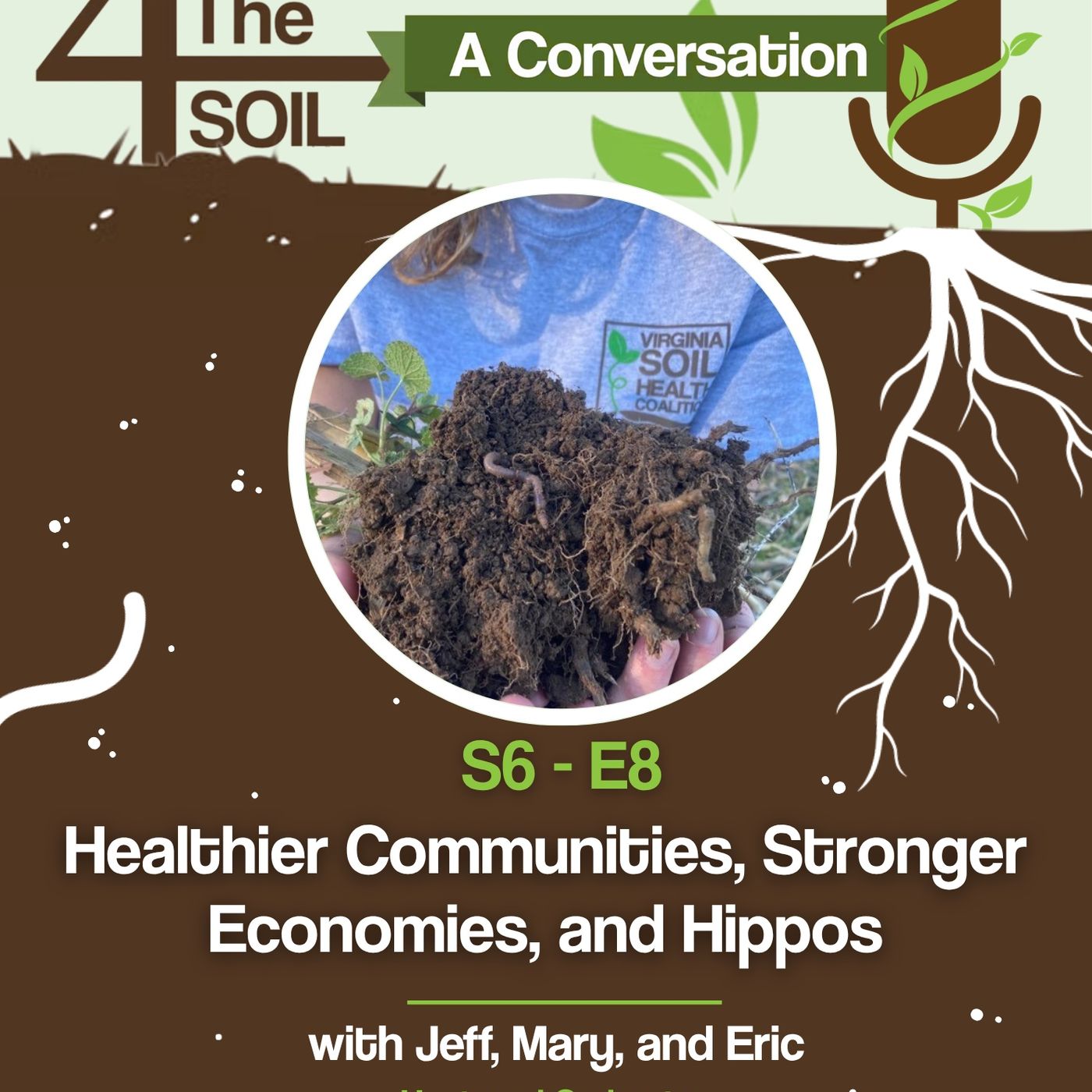
Soil health is a foundation for healthier communities, stronger economies, and more resilient landscapes. And yes, hippos can be major pests. During this episode of 4 The Soil: A Conversation, Jeff Ishee, Mary Sketch Bryant, and Eric Bendfeldt share who and what is for(4) the soil. Celebrating Earth Day on Wednesday, April 22, 2026, is a great way to build on that foundation.
Tune in, subscribe, and like anywhere you get your podcasts or 4thesoil.org/podcast
As always, we encourage you to cooperate with other farmers, graziers, and gardeners for peer-to-peer learning and to follow the four core so...
S6 - E7: Vegetable Farming as a Food and Health Business with Bob Jones, Jr., of The Chef's Garden, Part II
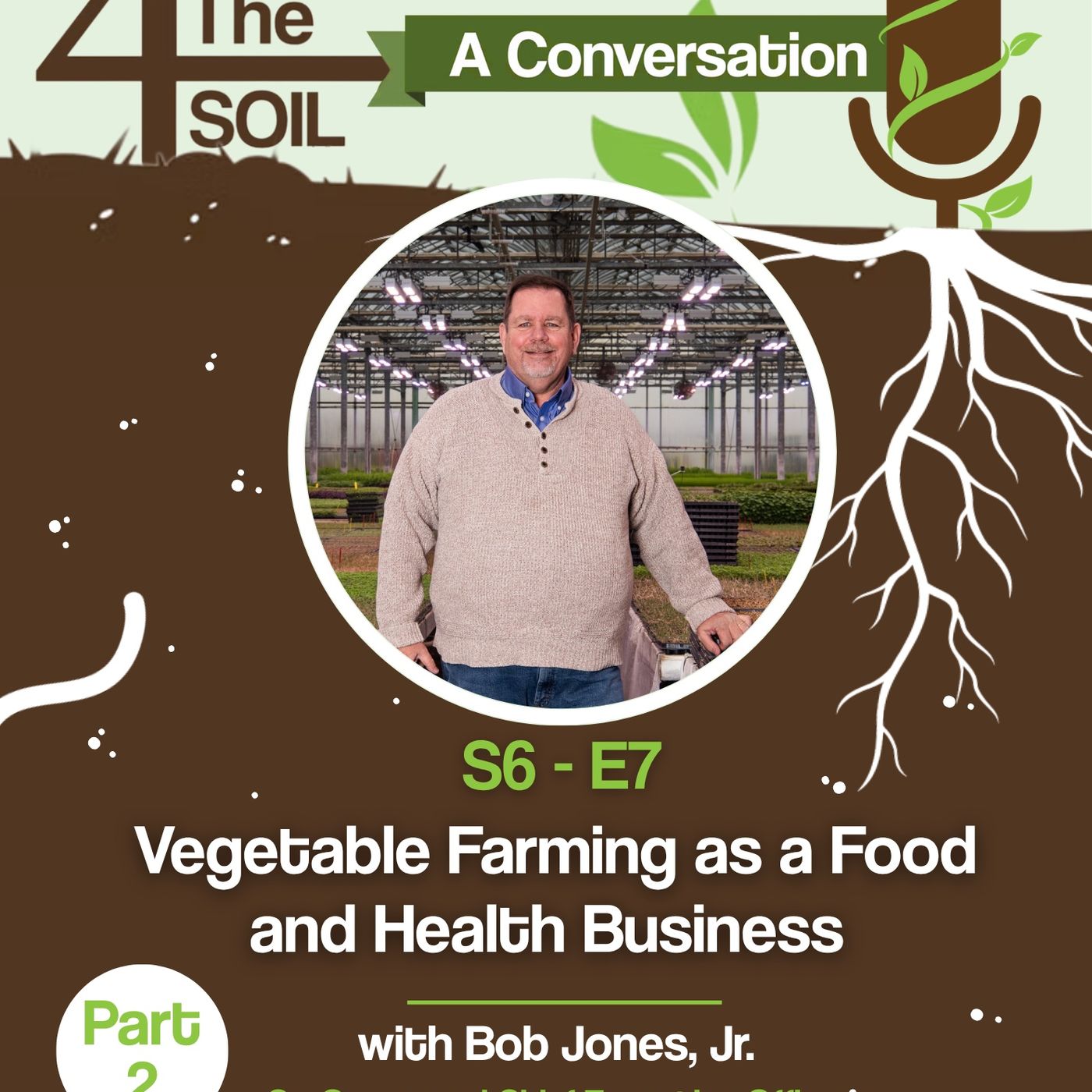
Vegetable farming is a food and health business that requires dogged persistence, curiosity, and a no-quit attitude. Bob Jones, Jr., is a second-generation vegetable farmer and the chief executive officer of The Chef's Garden in Huron, Ohio, who has been growing vegetables for over 40 years.
Bob and The Chef's Garden team collaborate with culinary professionals, physicians, and oncologists to test the taste, flavor, aesthetics, nutrient density, and food as the foundation of health. More than 700 chefs tour the farm and exchange ideas in The Chef's Garden's Culinary Vegetable Institute. Additionally, they worked with Regenified to certify their farm a...
S6 - E6: Love What You Do: Vegetable Farming with Bob Jones, Jr. of The Chef's Garden, Part I
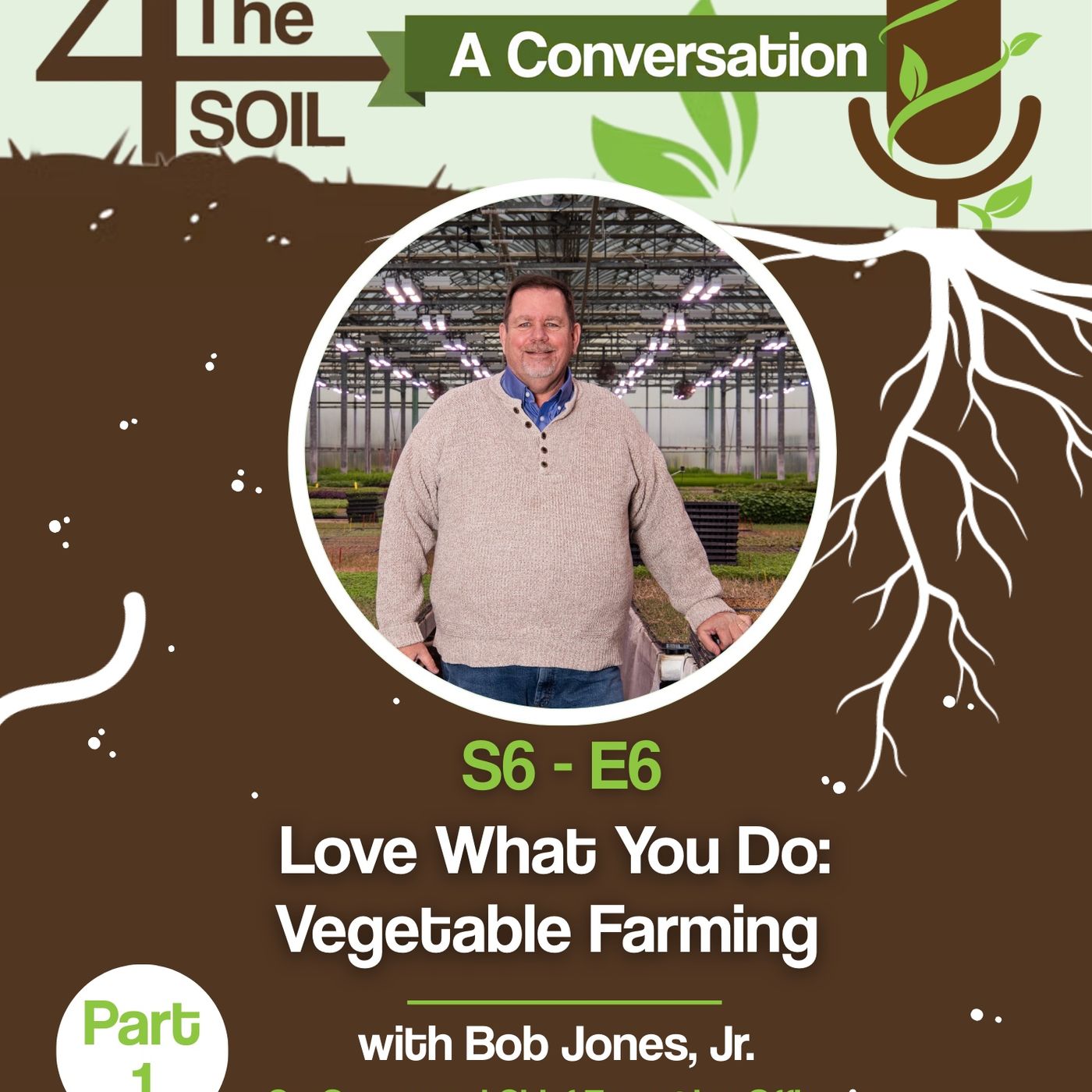
Bob Jones, Jr., is a second-generation vegetable farmer and the chief executive officer of The Chef's Garden in Huron, Ohio. Bob co-owns the vegetable farm and business with his brother Lee. Bob and his brother love producing and selling flavorful, healthy, nutritious vegetables, microgreens, and edible flowers.
Bob shares the history of The Chef's Garden with Mary, Jeff, and Eric, including a review of Economics 101 from the 1980s when interest rates peaked at 24%, and the farm went from 1,200 to six acres.
Bob and the Chef's Garden team work closely with their customers, culinary professionals, physicians, and on...
S6 - E5: Managing Change, Building Cover Cropping Systems with Doug Fifer of Fifer Family Farms, Pt. II
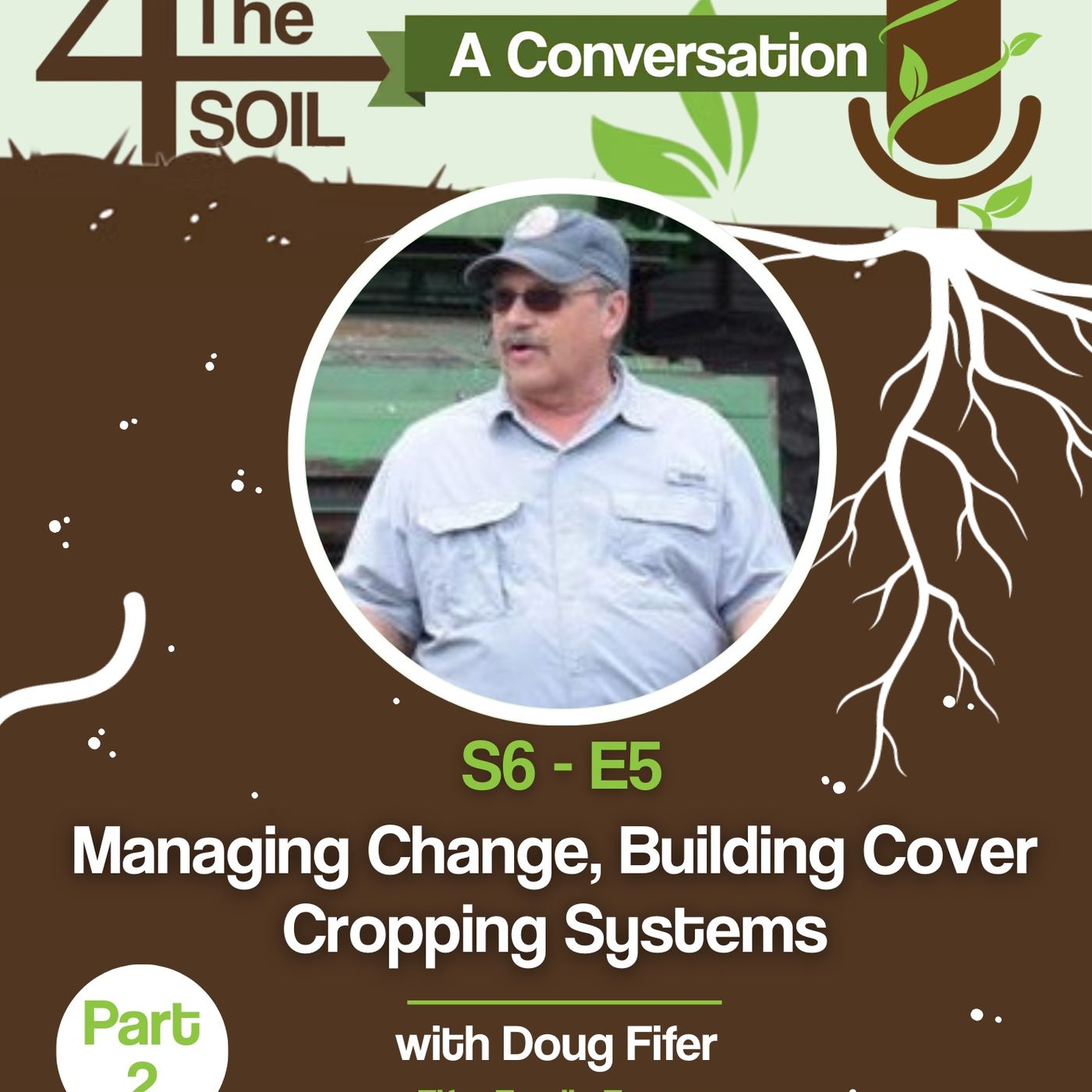
Doug Fifer of Fifer Family Farms joins Jeff, Mary, and Eric for a second episode to discuss how Doug manages change, inputs, and tighter margins with his farming and cover cropping systems. Doug acknowledges that we are all creatures of habit and have our comfort zones. Doug began experimenting and stretching his comfort zone with no-till farming and cover crops in 2010.
As Doug built his cropping system and expanded his focus on cover crops as an integral input for soil biology and building organic matter, Doug's only regret is that he did not start when he was 25 rather th...
S6 - E4: From Picking Up Rocks to Successful No-Till Farming with Doug Fifer of Fifer Family Farms, Pt. I
Where do you need to go with your farming? Doug Fifer of Fifer Family Farms joins Jeff, Mary, and Eric to talk about his experience and journey with no-till crop farming over the past fifteen years. Doug raises turkeys and cash crops in Mount Solon, Virginia, and is the president of the Virginia No-Till Alliance (VANTAGE).
For Doug, his journey with no-till farming began in 2010 when he began questioning where his farm needed to go. As a youth, Doug remembers having to pick up rocks from the field after tilling and cultivating the soil for planting. He and...
S6 - E3: Growing Heirloom Mums, Building Healthy Soil with Jessica Hall of Harmony Harvest Farm, Pt. II
What priorities excite you? Heirloom Chrysanthemums, soil health, and contributing back to the community are exciting priorities for Harmony Harvest Farm. In the previous episode, we learned the vision of Harmony Harvest Farm and their overarching aim to help people live and experience a better life through fresh flowers. Our returning guest, Jessica Hall, talks with us about her passion for growing heirloom mums and building healthy soil, and how these are two essential ingredients for achieving their vision.
Jessica emphasizes the importance of engaging your roots and making them stronger. For Jessica and her team, the farm...
S6 - E2: Living a Beautiful Life through Fresh Flowers with Jessica Hall of Harmony Harvest Farm, Pt. I
How can we live and enjoy a better life? Harmony Harvest Farm began with a lofty dream in 2011 and a vision of helping people to live and experience a better life through fresh flowers. Jessica Hall of Harmony Harvest Farm and Flower Genius joined Mary, Jeff, and Eric for a conversation about the farm business's vision, mission, values, and history.
Jessica owns and operates the farm business with her mom and sister in Weyers Cave, Virginia. Jessica and her family believe Virginia-grown and American-grown flowers should be accessible to everyone, everywhere. To fulfill this vision and mission, they b...
S6 - E1: Rooted in a Passion for the Earth, Soil, and the Bioeconomy with Ms. Fatema Mohajir
A desire and passion for caring for the earth, soil, and the natural environment can start at a young age.
Fatema Mohajir and her family are from the Bamyan province in central Afghanistan. As a child, Fatema's family lived in Iran, where her father worked at a large-scale vegetable farm. Fatema's father and older brother inspired her interest in soil science and farming.
Fatema studied at Kabul University and graduated in 2020. As a part of her studies, Fatema participated in a year-long Permaculture Program led by Rosemary Marrow from Australia. After graduating, Fatema received a scholarship...
S5 - E26: Flowers, Pollinators, Health, and Peace with Dr. Christine Mahoney, Pt. II
How can we care for the soil and farm for better health outcomes?
Dr. Christine Mahoney of the University of Virginia's Frank Batten School of Leadership and Public Policy and Wayflowering Flower Farm joins Mary and Eric for a conversation about soil health, regenerative farm design, and organic flower farming.
Dr. Mahoney shares how better outcomes, such as health, peace, and tranquility, can be achieved through enriching the soil, enhancing biodiversity, sequestering carbon, strengthening local ecosystems, and supporting pollinator habitats. For Dr. Mahoney, caring for the soil and creating an incredible place for flowers, bees, butterflies, and...
S5 - E25: Social Enterprises, Systems-Thinking, and Flower Farming with Dr. Christine Mahoney, Part I
How can social entrepreneurship help build soil health and achieve ecological goals?
Mary and Eric explore this question with Dr. Christine Mahoney of the University of Virginia's Frank Batten School of Leadership and Public Policy and Wayflowering Flower Farm. Dr. Mahoney shares her own experiences with social enterprises, systems thinking, and regenerative organic flower farming in this episode.
Dr. Mahoney reflects on the catalytic effect organizations and businesses can have on innovation and change, such as enriching the soil, enhancing biodiversity, sequestering carbon, strengthening local ecosystems, and supporting pollinator habitats.
To learn more about c...
S5 - E24: Health and Nutrition Start with the Soil with Dr. Robin "Buz" Kloot, Part II
Health and nutrition start with caring for the soil. Food can and should be our medicine. Dr. Robin "Buz" Kloot of the University of South Carolina's Arnold School of Public Health and Soil Health Labs shares his perspective on connections with soil health and public health with Eric, Mary, and Jeff in this episode.
Buz reflects on his own research but also points out what he has heard from farmers and ranchers he has worked with through the years. Building on the idea that eating is an agricultural act and food can be medicine, Buz would like health p...
S5 - E23: A Fundamental Overhaul and Paradigm Shift in Soil Science with Dr. Robin "Buz" Kloot, Part I
Changing course is never easy, especially if the change requires a complete overhaul at the most basic, fundamental level. Dr. Robin "Buz" Kloot of the University of South Carolina's Arnold School of Public Health and Soil Health Labs talks with Eric, Mary, and Jeff about this paradigm shift among farmers and within the soil science community.
Buz explains how the shift in thinking and paradigms occurred. In many cases, people were focused more on the symptoms rather than the cause, for instance, soil loss through erosion or poor water infiltration. Understanding the underlying cause required a whole-system approach. F...
S5 - E22: Encouraging a Hospitable Habitat for Soil Microorganisms with Dr. Ashley Jernigan of Virginia Tech, Pt. II
Did you know soil microorganisms of all sizes and shapes need water, air, shelter, and care to function and thrive? Dr. Ashley Jernigan, assistant professor and director of Virginia Tech's Sustainable and Organic Vegetable Crops Production Lab, returns to talk with Jeff and Mary about what farmers and gardeners can do to encourage a hospitable habitat for soil microorganisms.
As a soil ecologist, Ashley recommends keeping track of your soil organic matter level and its aggregate stability, and how these soil health indicators compare to native biological systems. Soils, like people, need quality food in diverse and complex...
S5 - E21: Regenerating Worn Out Soils with Dr. Ashley Jernigan of Virginia Tech, Pt. I
Does your garden soil just fall apart in your hands? How do you regenerate and bring back life to worn-out soils? Dr. Ashley Jernigan, assistant professor and director of Virginia Tech's Sustainable and Organic Vegetable Crops Production Lab, in visiting with Jeff and Mary, advises doing your own test in your garden or crop field with a shovel.
As someone who enjoyed digging soil pits as a seven-year-old, Ashley recommends sampling to a six-inch depth to get a sense of your soil's tilth and aggregate stability. If the soil does not have a good, varied crumbly structure, the...
S5 - E20: Soil Health beyond the Economic Rationale with Kasper Krabbe of Aarhus University, Pt. 2
Is the economic rationale of soil health always the top priority for farmers? Or, do other soil values rise to the top of farmers' minds, for example, having a healthy habitat for soil fungi? Kasper Krabbe, a doctoral student at Aarhus University in Denmark and a visiting guest scholar at Virginia Tech, returns to talk with Mary, Jeff, and Eric about his research into understanding farmers' intrinsic and extrinsic values in caring for soil.
Kasper states that a deeper understanding of farmers' values and motivations is needed because of the degraded condition of agricultural soils globally. For instance, p...
S5 - E19: Agroecological Dynamics of Soil Health with Kasper Krabbe of Aarhus University, Pt. I
When you close your eyes, how do you envision your farm and soil ecosystem? What ideals, values, and priorities are part of your vision and farm business model? Kasper Krabbe, a doctoral student at Aarhus University in Denmark and a visiting guest scholar at Virginia Tech, talked with Mary, Jeff, and Eric about these questions and his research interest in farmers' perceptions and decision-making.
Kasper is particularly intrigued by the human and cultural elements of farming and how context informs and shapes the agroecological system and soil health of individual farms and regional farming. Kasper's ongoing inquiry into t...
S5 - E18: Round Bale Grazing for Soil Health with Dr. Summer Thomas, Pt. II
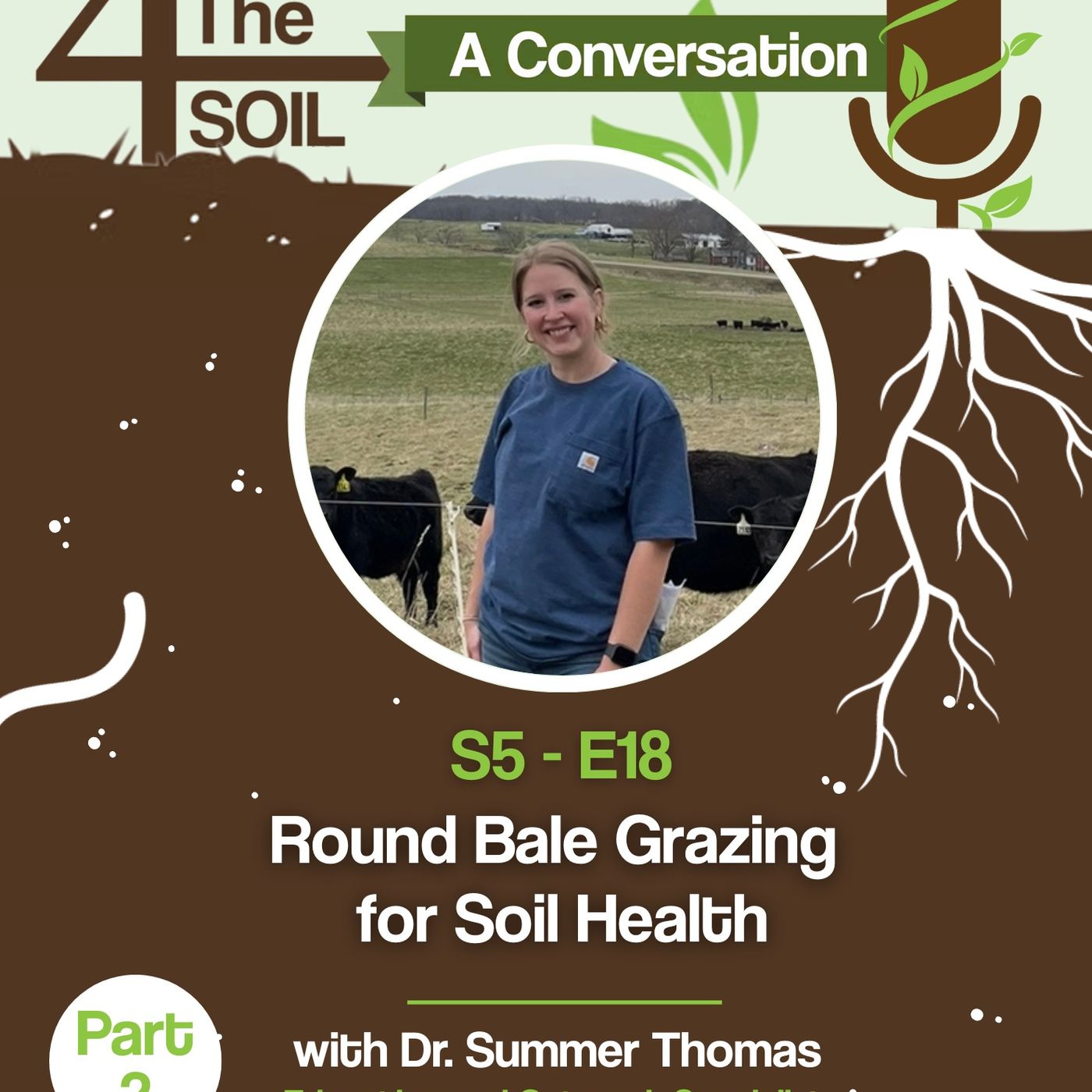
Feeding hay to livestock in the winter is very expensive, and often results in a sacrifice lot where manure gathers. At the same time, manure is considered gold because of its nutrient content, ability to supply organic matter, and to build soil life. In this second episode, Dr. Summer Thomas, education and outreach specialist with the Virginia Soil Health Coalition, takes us on a deeper dive into her research on the benefits of round bale grazing and how it pertains to the four core soil health principles.
Summer explains how livestock and round bale grazing are land and...
S5 - E17: Everything Good Starts with the Soil with Dr. Summer Thomas, Pt. I
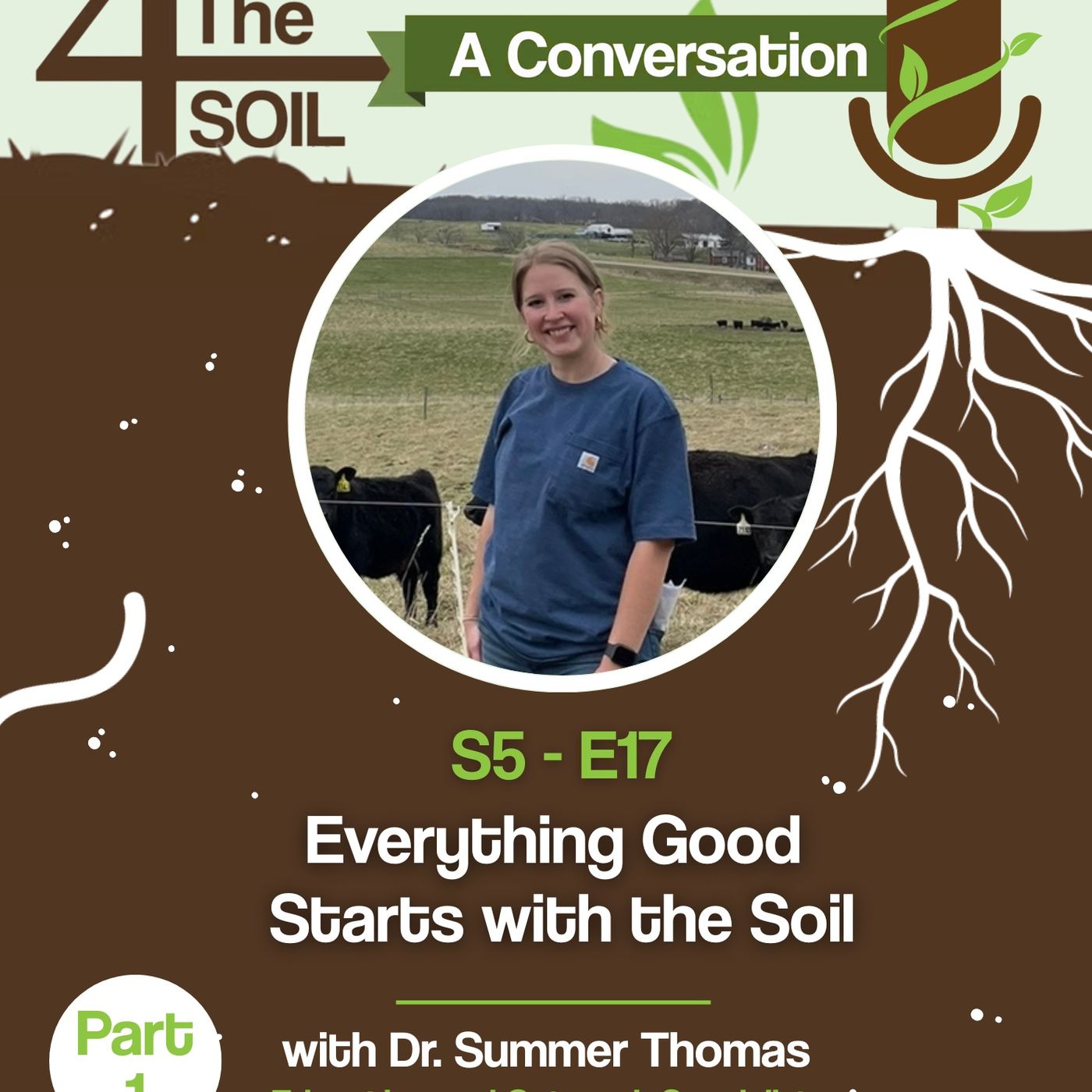
Everything good starts with the soil and a conservation stewardship mindset. In the 101st episode, Dr. Summer Thomas, education and outreach specialist with the Virginia Soil Health Coalition, explains how agriculture and soil health are good for everyone. As a third-generation farmer from Delaware, former watermelon queen, a trained soil scientist and educator, and an overall advocate for agriculture, Summer shares some of her earliest experiences of 4-H and FFA with Jeff, Mary, and Eric in public speaking, youth education, and land stewardship.
These early education and outreach experiences were a launch point for her passion for agriculture...
S5 - E16: Celebrating Our 100th Podcast Episode with Jeff, Mary, and Eric

During this 100th episode of 4 The Soil: A Conversation, Jeff, Mary, and Eric take a look back at some of the most memorable topics and guests. They share how (and why) the podcast started in 2021, and also offer their vision for the future of the podcast.
To help us commemorate this milestone, please share how and why you are 4 the Soil with us and others.
As always, we encourage you to cooperate with other farmers, graziers, and gardeners for peer-to-peer learning and to follow the four core soil health principles:
1) Keep the soil covered...
S5 - E15: Building Confidence and Knowledge through Mentorship with Dara Booher, Pt. II
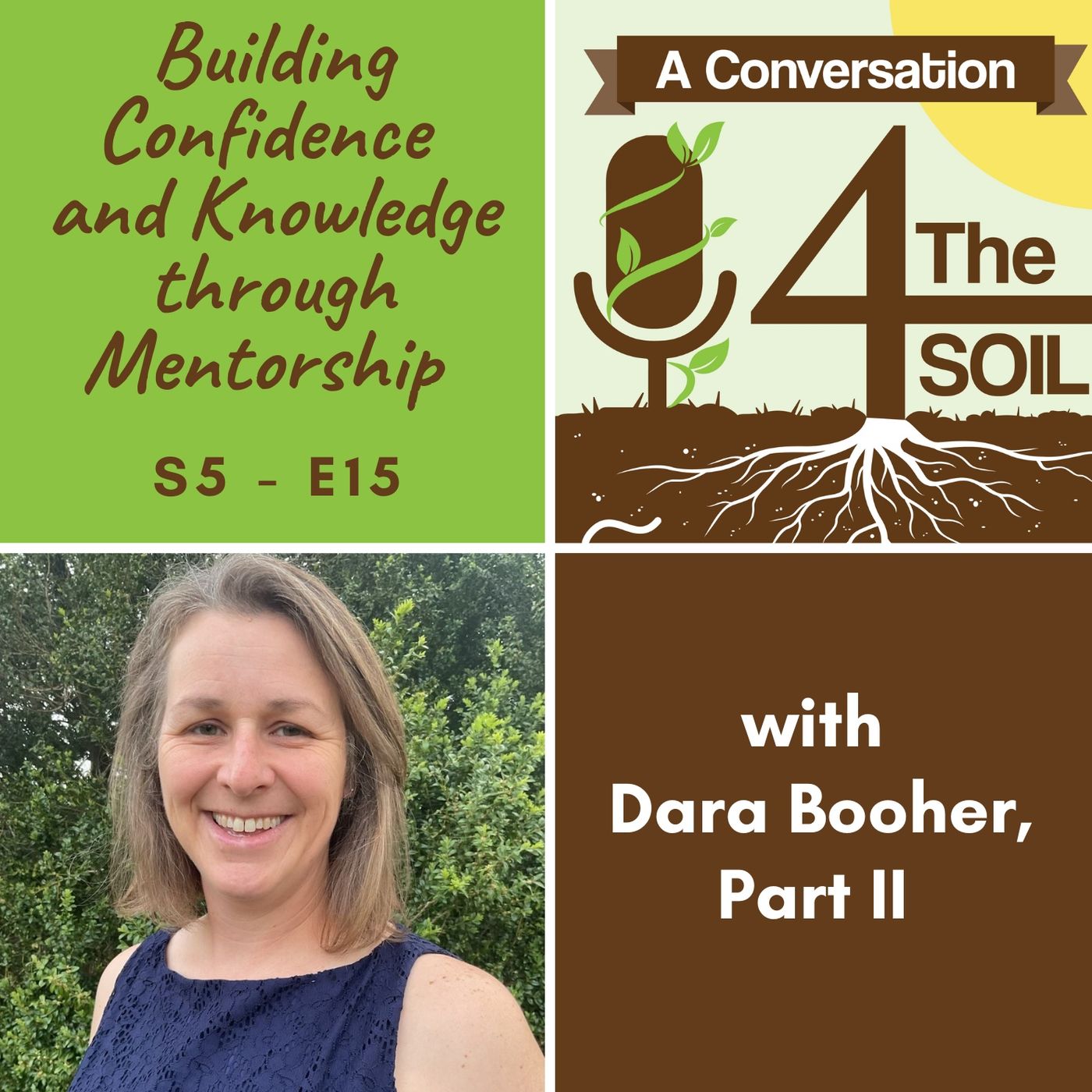
Building confidence and knowledge through mentorship is necessary for farmers to overcome fears and take bigger steps towards meeting their goals. Dara Booher wears many educational hats. Dara is the coordinator of the Virginia Forage and Grassland Council's farmer-mentor program and the facilitator of the Virginia Farmer Mentor Network, a collaboration of Virginia State University, the Virginia Forage and Grassland Council, the Virginia No-Till Alliance (VANTAGE), and Virginia Tech's Eastern Shore Agriculture Research and Education Center (AREC).
In her work with youth and farmers, Dara recommends getting to know people and meeting them where they are, particularly for...
S5 - E14: Youth Education and Soil Health with Dara Booher, Pt. I
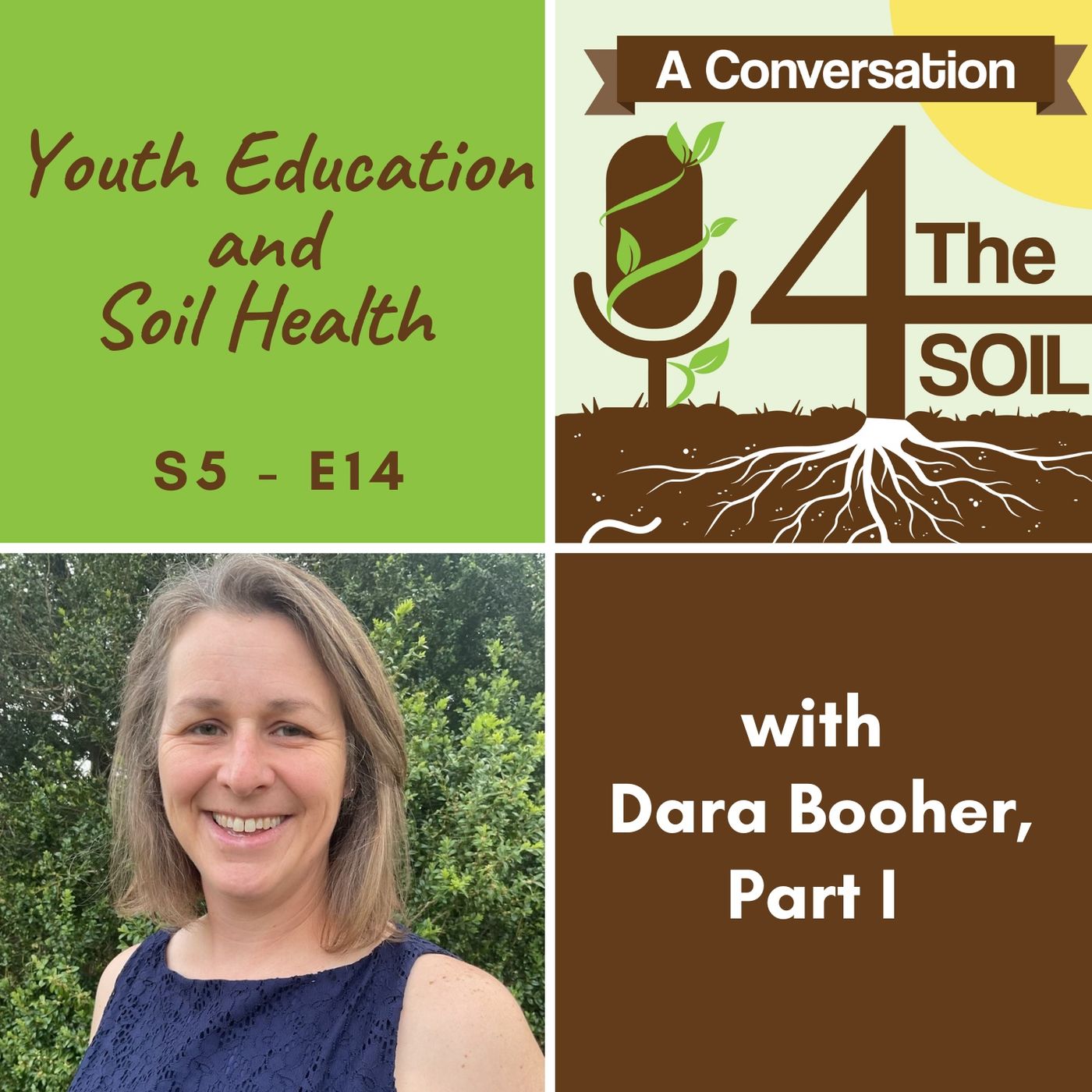
Soil and agriculture provide us with something every day. Dara Booher is an agricultural educator with Shenandoah County Public Schools and a farmer-mentor coordinator with the Virginia Forage and Grassland Council and the Virginia Soil Health Coalition. Dara loves talking to youth and others about soil and agriculture. In this episode, Dara shares her enthusiasm for youth education and soil health with Mary, Eric, and Jeff, along with many teaching and demonstration resources (e.g., Enviroscape, Soil Your Undies, etc.) for immersive experiences and classroom fun.
Dara recommends the National Agriculture in the Classroom teacher center for lesson...
S5 - E13: Seven Generations of Stewarding the Land with Susan Watkins
In this episode of the podcast, Jeff Ishee chats with Susan Watkins of Watkins Farms in Dinwiddie County, Virginia, a 3,500-acre farm growing soybeans, corn, and wheat. Susan shares information about the long history of her family far, their transition to cover crops and no till over twenty years ago, and their approach to cover cropping. She shares about the cost and labor savings that have come from transitioning to these practices.
Watkins Farms is located in the Chesapeake Bay watershed, which means conservation practices like no-till planting and the use of cover crops have an impact beyond t...
S5 - E12: A Whole Community with Elizabeth McMullen and Garland Mason of Organic Valley, Pt. II
The three-year transition to certified organic farming can present a formidable challenge for farmers. A whole community working together can make the process smoother. In this second episode, Elizabeth "Liz" McMullen and Garland Mason of Organic Valley Cooperative (OV) share how the company and its farm membership nourish a whole community perspective to benefit existing farmer member-owners and reduce obstacles for farmers who are curious about organic production and joining the cooperative as members.
Liz and Garland state that OV regional pool managers can talk with farmers about the certification process, requirements, and specific on-farm organic practices. Liz an...
S5 - E11: Common Ties: Cooperation and Sustainability with Elizabeth McMullen and Garland Mason of Organic Valley, Pt. I
Public Relations Specialist Elizabeth McMullen and Sustainability Funding and Communications Specialist Garland Mason of Organic Valley Cooperative join Mary and Eric to share about the common ties that are essential to the farmer-owned cooperative. Cooperation and a strong commitment to the sustainability of small and mid-size family farms, local culture, and community are the most basic ties. In this episode, Elizabeth and Garland outline the history of Organic Valley and how the business started as a vegetable cooperative in 1988 and now has over 1,500 dairy farmer-member owners in 29 states with an average herd size of 70 cows per farm.
Preserving s...
S5 - E10: Farmers Talking with Farmers with Anthony Beery of Beery Farms, Part II
Farmers talking with farmers is key to building soil health, encouraging innovation, and expanding peer-to-peer mentoring. Anthony Beery of Beery Farms and Cumberland Hay and Straw LLC shares his journey of learning, mentoring, and on-farm experimenting with Mary Sketch Bryant and Jeff Ishee. In the previous episode, Anthony talked about how his father's counsel and encouragement benefitted him. Anthony provides similar mentorship to his children and fellow farmers through the Virginia No-Till Alliance (VANTAGE) and Virginia's Integrated Cropland Agronomy (ICA) program so others can generate new ideas and enjoy success.
Like the majority of farmers, Anthony is constantly le...
S5 - E9: Soil Health is Attainable with Anthony Beery of Beery Farms, Part I
Soil health is attainable. Anthony Beery of Beery Farms and Cumberland Hay and Straw LLC shares that message with Mary Sketch Bryant and Jeff Ishee based on his farming experience and journey. Anthony grew up in the Shenandoah Valley, where he and his father, Danny, raised dairy cows and poultry. Anthony benefitted from his father's mentorship and encouragement to be open to new ideas and to experiment.
Anthony and his family moved to Cumberland County in 2018 to begin custom crop production and start Cumberland Hay & Straw LLC. Anthony received the 2024 Carl Luebben Soil Health and Water Quality Award...
S5 - E8: Ins and Outs of Compost Tea with Nicky Schauder of Permaculture Gardens, Part II
In this episode, Nicky Schauder of Permaculture Gardens continues the conversation about permaculture and the ins and outs of compost tea with Mary Sketch Bryant, Marian Dalke, and Jeff Ishee. Nicky received two USDA-Sustainable Agriculture Research and Education (SARE) Producer Grants to specifically research the benefits of compost tea and its effects on plant growth, yield, soil biology diversity, and the stability of soil health. Nicky's research question was: Does compost tea make certain leafy vegetables grow bigger or not?
To read the Permaculture Gardens blog and other resources about soil regeneration, compost tea, permaculture, and growing food...
S5 - E7: Grow-It-Yourself (GIY) with Nicky Schauder of Permaculture Gardens, Part I
Nicky Schauder and her family started Permaculture Gardens to make permaculture and growing food accessible to everyone - especially families and children. Nicky shares her story and experience with learning, researching, and growing food with Mary Sketch Bryant, Marian Dalke, and Jeff Ishee. Nicky is constantly learning by experiment. Nicky is a two-time recipient of USDA-Sustainable Agriculture Research and Education (SARE) Producer Grants for Research and Experimentation with permaculture and compost tea.
Permaculture Gardens' Grow-It-Yourself (GIY) program stems from Nicky's learning, experimentation, and efforts to debunk the idea that growing food is neither accessible nor possible. The Live...
S5 - E6: Education first and foremost with Nicole Shuman of Cornerstone Farm, Part II
Nicole Shuman is a community agriculturalist and educator at Cornerstone Farm at Fairfield Middle School in Henrico County, VA. Nicole shares that education is the first and foremost goal of Cornerstone Farm. As a functioning farm, students and the school community learn what and how food is grown, while also gaining hands-on knowledge and experience growing food for a farmstand cost-effectively.
Nicole outlined the big picture and how the farm provides additional service learning opportunities and a place to learn about sound nutrition, environmental sustainability, food security, and ways to contribute to the community in tangible ways.
S5 - E5: Hands-On Community Agriculture Work with Nicole Shuman of Cornerstone Farm, Part I
Context is foundational to authentic, experiential learning, and understanding how to build soil health within a landscape context. Hands-on educational activities and programs help students of all ages better understand the context and real-life application of learning objectives, principles, and practices. Nicole Shuman is a community agriculturalist with Henrico County Public Schools. Nicole shares her experience with Mary, Jeff, and Eric and how she became interested in soil health and agricultural education work, Nicole specifically talks about her community agriculture work at Cornerstone Farm at Fairfield Middle School and how the farm helps get the students outside and gives them...
S5 - E4: Cultivating Wellness from the Soil Up with Farmer Cee of Green Heffa Farms, Part II
Clarenda "Farmer Cee" Stanley of Green Heffa Farms is someone who does not take health and wellness for granted but actively seeks to catalyze and cultivate wellness from the soil up. Farmer Cee is the founding CEO and owner of Green Heffa Farms, a black woman-owned Certified B Corporation, wellness brand, and herb farm based in North Carolina. Farmer Cee believes everyone can start on a path to wellness with care of the soil beneath their feet.
In this episode, Farmer Cee shared with Mary, Jeff, and Eric what Green Heffa Farms does to care for the land, s...
S5 - E3: Defying Obstacles, Bringing Voices to Sustainability with Farmer Cee of Green Heffa Farms, Part I
Defying obstacles, honoring the land, and giving voice to sustainability and business ethics requires commitment and dedication to a vision. Clarenda "Farmer Cee" Stanley is a visionary entrepreneur, farmer, herbalist, and advocate for ethical business and sustainable living. Known affectionately as "Farmer Cee," she is the founding CEO of Green Heffa Farms, a wellness brand and herb farm that celebrates the power of nature to heal and nourish.
Beyond her work as an executive, farmer, and herbalist, Farmer Cee is also a passionate educator and community leader. Her farm has achieved the distinction of becoming the nation's premier B...
S5 - E2: Understanding Context, Establishing Baselines with Rick Clark of Farm Green, Part II
Understanding context and establishing baselines are critical for developing systematic approaches to change for the right reasons. Rick Clark of Clark Land & Cattle and Farm Green Consulting is a fifth-generation farmer who farms 6,000 plus acres of certified organic crops in Warren County, Indiana. In addition to cash, oilseed, and cover crops, Rick raises cattle and sheep using his system of regenerative organic stewardship with no tillage. Through the years, Rick has worked to reduce synthetic inputs on his farm and focused on the return on the investment of any input and how that affects overall profitability.
In talking...
S5 - E1: Commitment and System Balance with Rick Clark of Farm Green, Part I
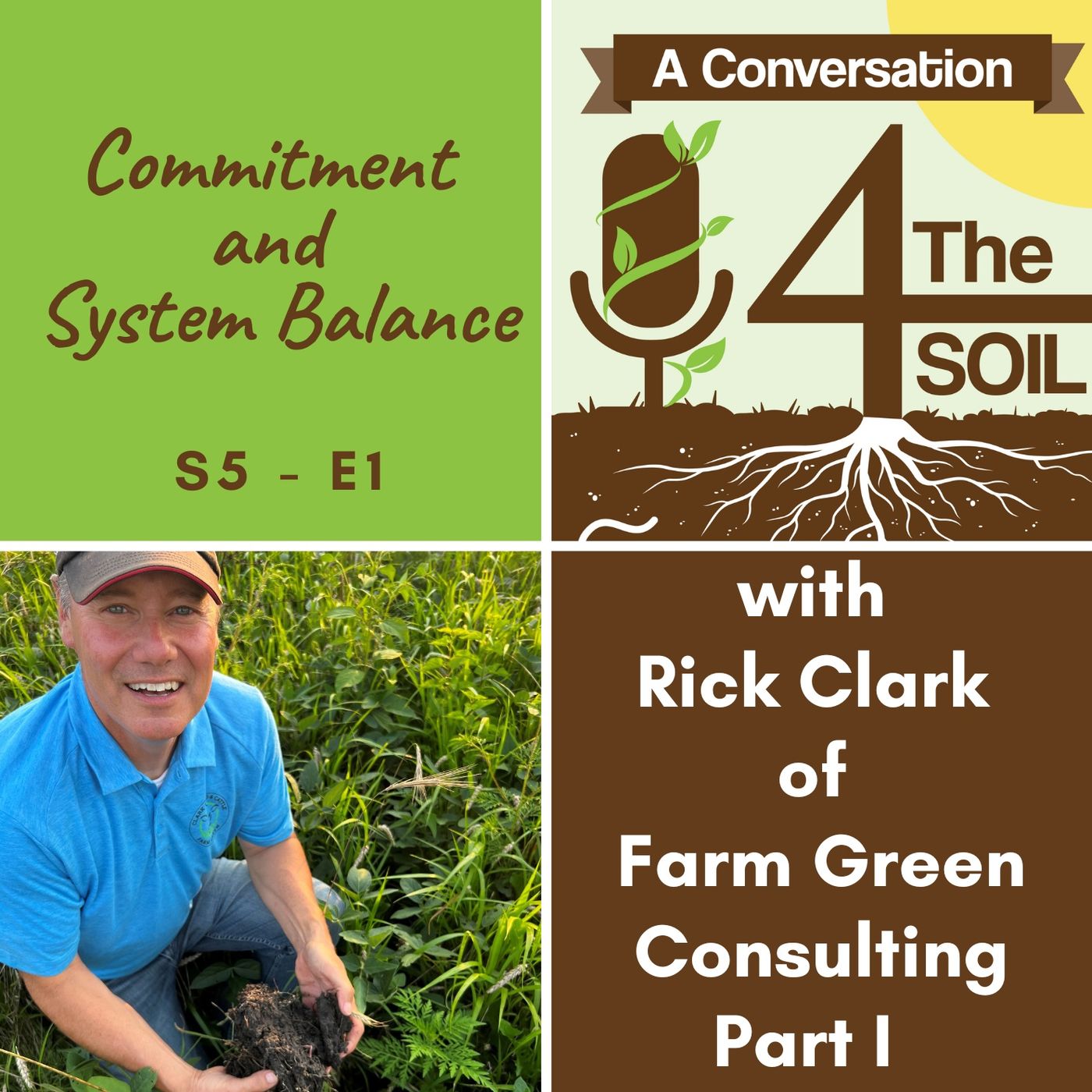
Building soil health and finding system balance requires commitment, fortitude, adaptability, and working with Mother Nature. Rick Clark of Clark Land & Cattle and Farm Green Consulting is a fifth-generation farmer in Warren County, Indiana. Rick farms corn, soybeans, wheat, milo, cover crops, small grains, and other oilseed crops using regenerative organic no-till methods and systems thinking on all his acreage. Rick refers to his system as regenerative organic stewardship with no tillage. Rick was a guest speaker at the recent Profitable Soil Health Field Day held in Franklin County, Virginia.
In talking with Mary, Jeff, and Eric about...
S4 - E26: A Regional Food System Perspective with Maureen and Mo of LEAP, Part II
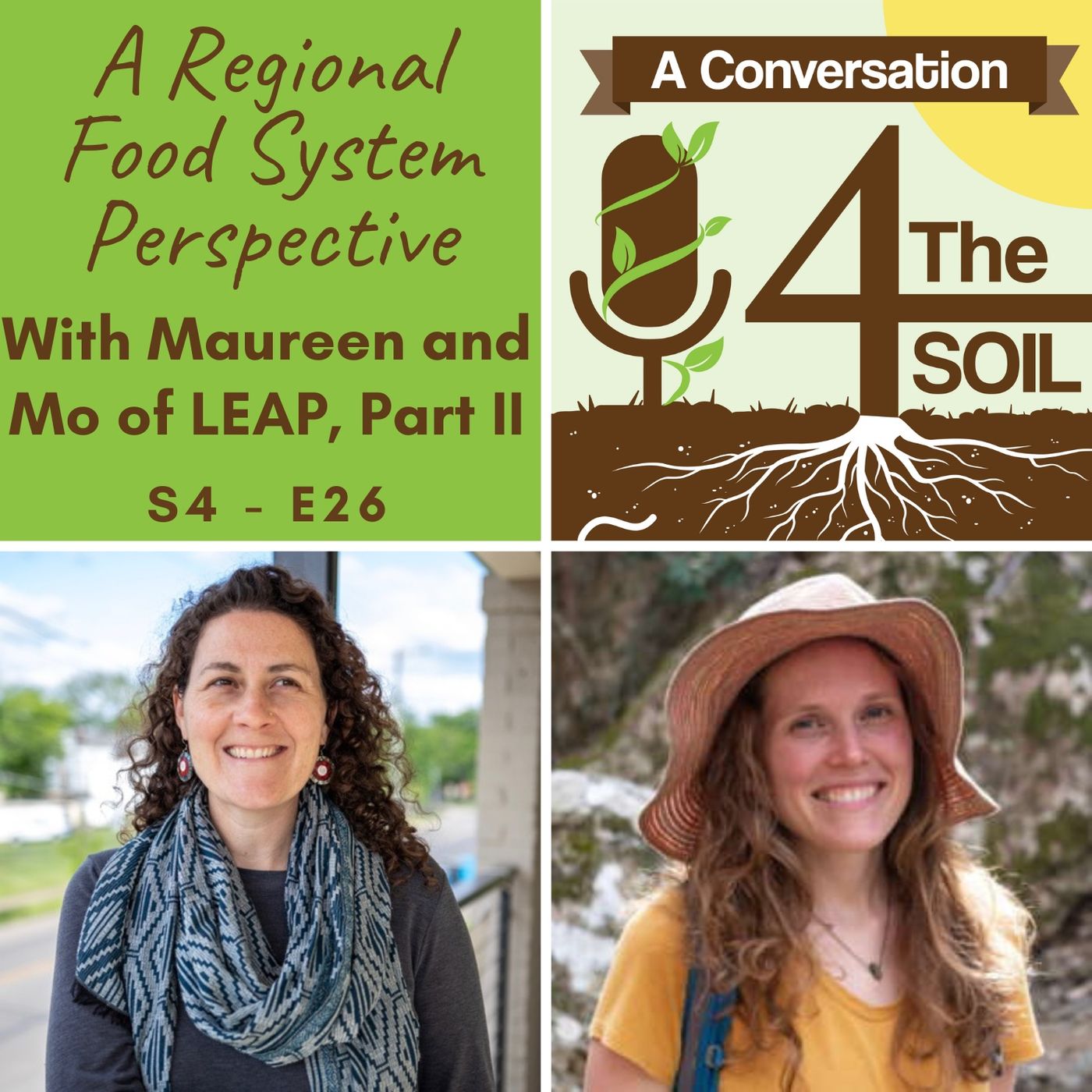
Our conversation with Maureen McNamara Best and Maureen "Mo" McGonagle on regional food system development and networks continues this week with a specific focus on food as medicine. Maureen McNamara Best is the executive director of LEAP (Local Environmental Agriculture Project) and Maureen "Mo" McGonagle is the director of the Roanoke Foodshed Network. In this episode, Maureen and Mo discuss educational and community outreach programs that connect to soil health and medical approaches to healing and prevention of diet-related illnesses. Maureen shares about the Virginia Fresh Match program and LEAP's Kids Bucks program. These two programs are aimed at promoting...
S4 - E25: A Regional Food System Perspective with Maureen and Mo of LEAP, Part I
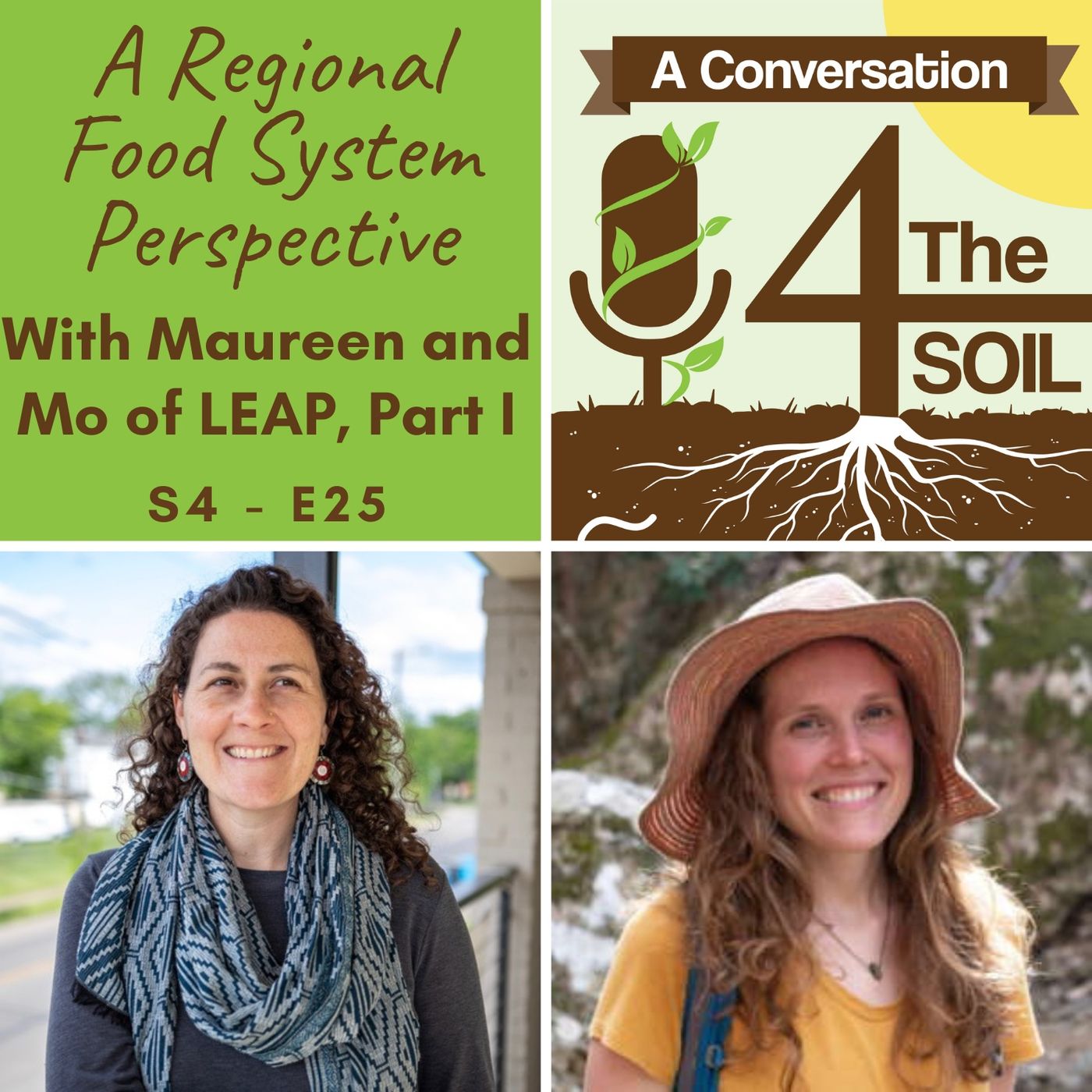
What does a regional food system network look like? Maureen McNamara Best is the executive director of LEAP (Local Environmental Agriculture Project) and Maureen "Mo" McGonagle is the director of the Roanoke Foodshed Network. Maureen and Mo provide a perspective lens into food system relationships and community collaborations emerging and developing in the Roanoke region of Virginia. Maureen shares that stories and relationships are critical in coming together; community and farm connections must be visible and more tangible. Mo offered that food system networks also require good soil health to cultivate change, where choice, dignity, equity, and values are encouraged...